


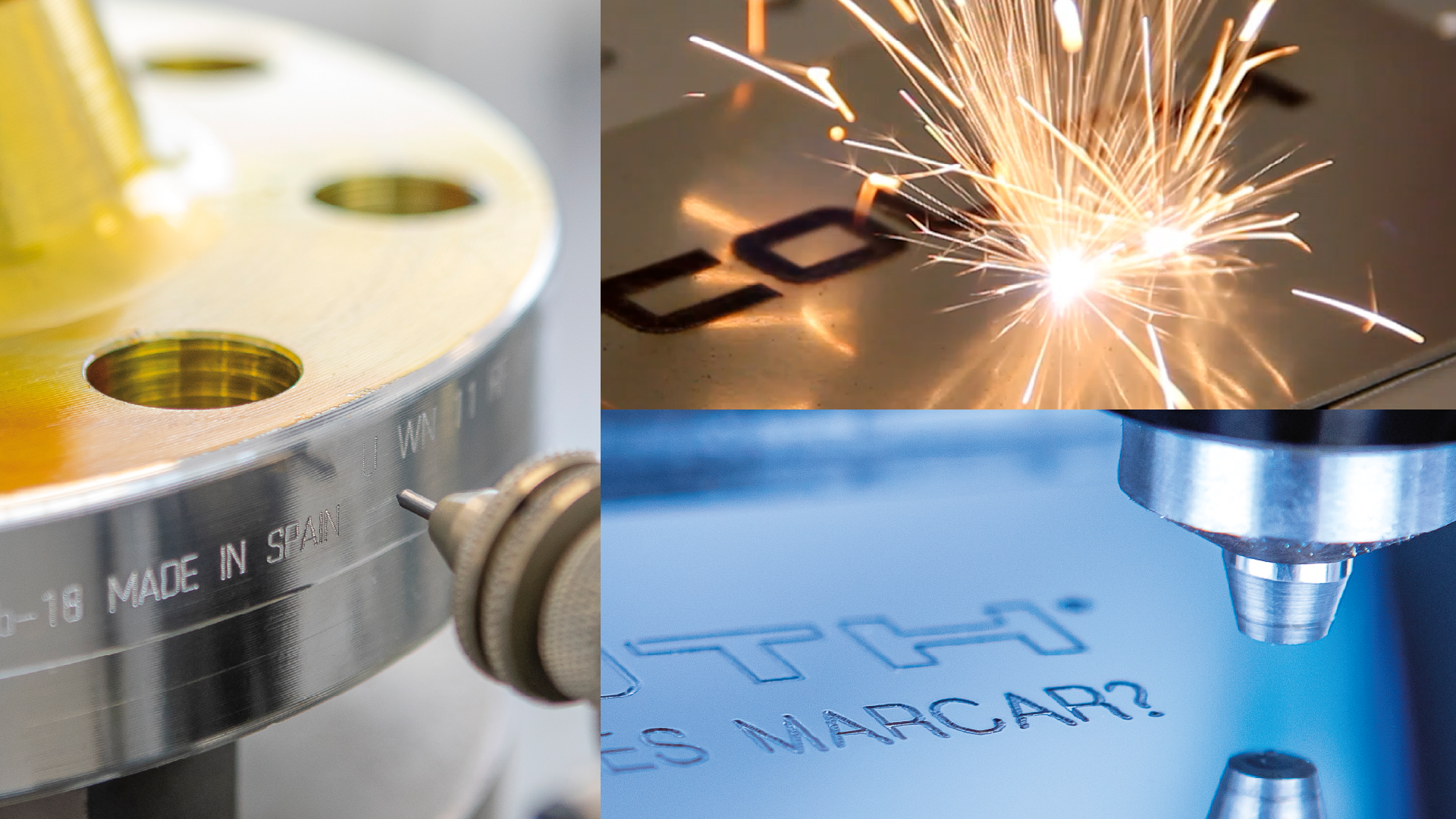
Selecting the most suitable industrial marking technology is a key factor in ensuring traceability, consistent quality, controlled operating costs, and compliance with regulatory requirements in demanding production environments. In this article, we explain the determining technical criteria and how to choose a solution that meets your current and future needs.
- Why is choosing industrial marking technology critical?
Marking technology determines readability, mark durability, integration into automated processes, and compliance with permanent industrial traceability standards. Inadequate marking can result in operational errors, product rejections, or even regulatory non-compliance.
- Common myths in the selection of marking technology
One of the most frequent mistakes is to think that “one technology fits all.” The industrial reality is that each technology—laser, micro-percussion, or scratching—has specific advantages and limitations depending on:
- The material we need to mark
- Mark durability requirements
- Production speed and cycle
- Marking station
- Key factors in deciding on the right technology
3.1. Material to be marked
Each material (stainless steel, aluminum, plastics, organic materials) responds differently to each marking technology. Some solutions—such as laser marking—offer contactless marking, which prevents deformation and wear on the equipment and is optimal for high-density codes and permanent traceability.
3.2. Mark durability
It is essential to evaluate resistance to abrasion, chemicals, temperature, or washing cycles depending on the production environment.
3.3. Production rate and automation
Lines with fast cycles and high repetitiveness require solutions with PLC/SCADA integration and reproducibility on demand.
3.4. Regulatory and traceability requirements
Sectors such as automotive, aerospace, pharmaceutical, and energy have ISO criteria or approvals that condition the choice of technology. In environments such as the automotive industry, silent marking is a key factor.
- Benefits of the right technical decision
The right choice of industrial marking technology allows for:
- Permanent and legible traceability
- Integration with MES/WMS systems
- Reduction in automatic reading errors
- Lower cost of non-quality
What do you need to mark?
At COUTH, we have extensive experience in industrial marking technologies and in analyzing real applications in demanding production environments to help you choose the perfect solution.
Contact our technical team for a personalized analysis of your industrial application.
