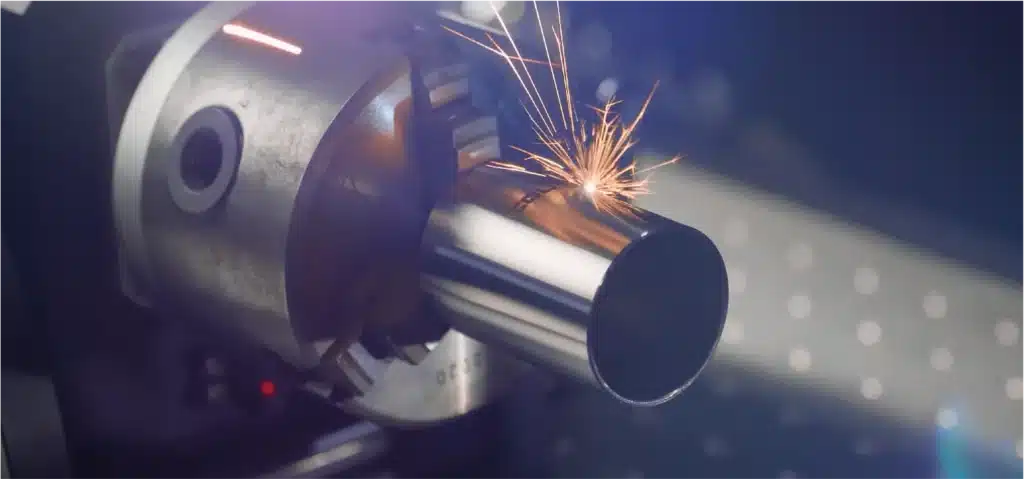
Industrial marking of alphanumeric codes allows for the identification of parts, components, plates, tools, subassemblies, and products using combinations of letters, numbers, and special characters. This type of marking is one of the most widely used in industrial settings because it allows for clear, direct, and legible information that is easily understood by both operators and control systems.
Alphanumeric codes can include serial numbers, part numbers, lot codes, manufacturing dates, shifts, internal identifiers, VINs, supplier codes, or any combination of characters needed to track a part’s traceability. When applied directly to the material using permanent marking technologies, the identification can remain intact throughout manufacturing, assembly, transportation, maintenance, and the component’s entire lifecycle.
Unlike other, more complex types of markings—such as DataMatrix codes, QR codes, or barcodes—alphanumeric marking can be performed using different technologies: dot peen marking, scribing, or laser. The choice depends on the material, the required depth, the visual finish, the character size, the cycle time, the production environment, and whether the markings need to be read by humans or machines.
COUTH develops industrial marking and traceability solutions using dot peen marking, scribing, and laser technologies. In alphanumeric applications, these technologies can be used for everything from deep, durable markings on robust metal parts to high-definition identifications on plates, treated components, or precision parts.

An industrial alphanumeric code is a combination of letters, numbers, and, in some cases, symbols or special characters used to identify a part, product, batch, tool, component, or process. Unlike a 2D code, which requires a scanner to interpret the information, an alphanumeric marking can be read directly by a person.
In industry, alphanumeric codes are common because they allow essential information to be communicated simply and permanently. They can be used alone or alongside other types of markings, such as DataMatrix codes, QR codes, logos, or pictograms.
Alphanumeric codes can be tailored to the needs of each production process. Their flexibility allows for the encoding of fixed or variable information, visible directly on the part.
A serial number uniquely identifies a specific part. It is commonly used on machinery, tools, critical components, industrial equipment, nameplates, and products that require individual tracking.
Part numbers allow for the identification of models, versions, variants, product families, or components within a production system.
A batch code links a part to a specific production run, material, supplier, date, or manufacturing order.
The manufacturing date can be used for internal control, warranty purposes, traceability, maintenance, technical expiration, or document management.
The VIN—Vehicle Identification Number—is an alphanumeric identifier used on vehicles. In industrial and automotive applications, it must be permanently and legibly marked in designated areas of the vehicle or component.
Supplier codes identify the origin of a part or component within industrial supply chains.
These may include codes for the production line, shift, workstation, operator, machine, production facility, or any other data relevant to internal traceability.
In some cases, hyphens, slashes, periods, separators, technical symbols, or characters defined by the company’s identification system may be used.
A serial number uniquely identifies a specific part. It is commonly used on machinery, tools, critical components, industrial equipment, nameplates, and products that require individual tracking.
Part numbers allow for the identification of models, versions, variants, product families, or components within a production system.
A batch code links a part to a specific production run, material, supplier, date, or manufacturing order.
The manufacturing date can be used for internal control, warranty purposes, traceability, maintenance, technical expiration, or document management.
The VIN—Vehicle Identification Number—is an alphanumeric identifier used on vehicles. In industrial and automotive applications, it must be permanently and legibly marked in designated areas of the vehicle or component.
Supplier codes identify the origin of a part or component within industrial supply chains.
These may include codes for the production line, shift, workstation, operator, machine, production facility, or any other data relevant to internal traceability.
In some cases, hyphens, slashes, periods, separators, technical symbols, or characters defined by the company’s identification system may be used.
Alphanumeric marking serves a clear purpose: to facilitate the direct, permanent, and traceable identification of parts and components.
Unlike a 2D code or a barcode, alphanumeric text can be read by an operator without the need for a specific scanner. This facilitates quick verifications during production, assembly, maintenance, or quality control.
Alphanumeric codes allow a part to be linked to a specific production order, batch, date, supplier, line, or process.
The marking can be linked to inspections, tests, measurements, validations, or compliance records.
For machinery, tools, fixtures, or spare parts, an alphanumeric mark allows for quick identification of the item and access to its history, calibration, replacement, or repair records.
In sectors such as automotive, aerospace, rail, energy, or industrial machinery, certain components require permanent identification to ensure documentation control and traceability.
Metal or technical nameplates typically include text, part numbers, serial numbers, manufacturer information, year, model, warnings, or technical data.
Many companies define internal identification codes that must remain visible and legible throughout the component’s service life.
Alphanumeric marking can be performed using dot peen marking, scribing, or laser. Each technology offers different advantages and should be selected based on material, depth, finish, legibility, and production environment.
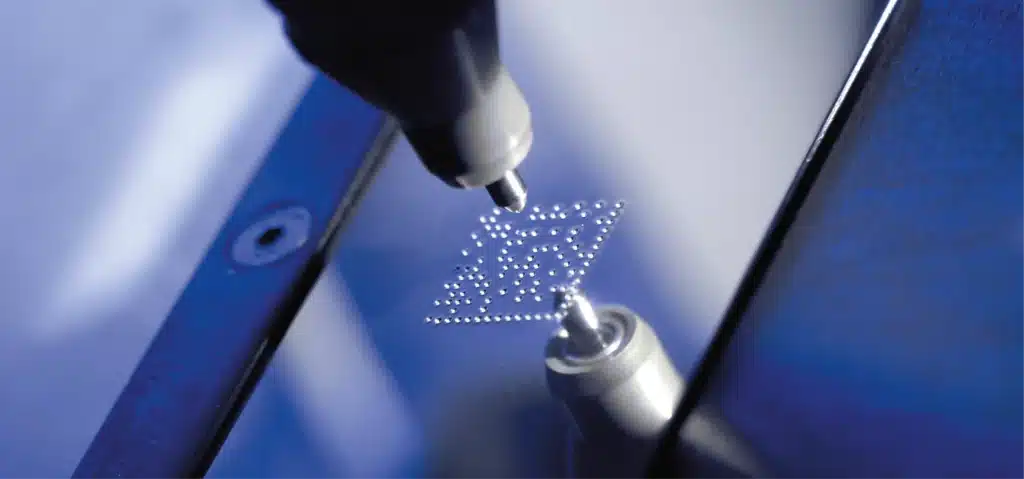
Dot peen marking marking creates characters through controlled impacts on the surface. Each character is formed by a series of dots, creating a permanent mark through mechanical deformation.
The marking punch strikes the material in a controlled manner. The dots are arranged to form letters, numbers, or symbols. The result is a dotted, legible, and durable mark.
Dot peen marking is primarily used on:
Dot peen marking marking is recommended when a permanent alphanumeric mark is needed on robust parts, with sufficient depth and mechanical strength. It is commonly used on metal parts, chassis, tools, jigs, machined components, industrial plates, and traceability applications.
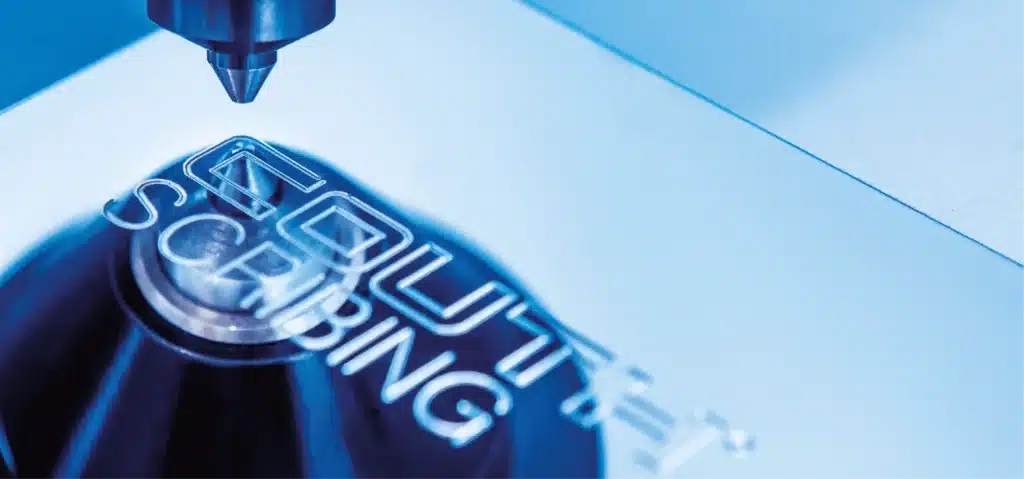
Scribing marking creates characters using a tip that penetrates and moves across the surface, forming continuous lines. This technology is well-suited for deep, legible alphanumeric markings with low noise levels.
The scribing tip penetrates the material and moves across it, forming continuous lines. The characters are formed by lines, not by dots. This produces a clean, continuous, and permanent mark.
Scribing is primarily used on:
Scribing is recommended when deep, quiet, and highly legible alphanumeric codes are needed, especially on metal parts that can be incised. It is suitable for serial numbers, part numbers, technical plates, and VIN-type markings when the application requires depth and a continuous line.
Laser marking uses a concentrated beam of light to modify the material’s surface and generate high-definition characters. It can produce contrast, engraving, annealing, ablation, foaming, or coating removal, depending on the material and process parameters.
The laser acts on specific areas of the surface to form letters, numbers, or symbols. It can produce fine, precise marks of high visual quality without mechanical contact with the part.
The laser can be used on:
Laser marking is recommended when high-precision alphanumeric marking, a good visual finish, small character size, or contactless marking is required. It is also suitable for delicate parts, anodized plates, electronic components, treated surfaces, and applications involving variable data in production lines.
Dot peen marking marking creates characters through controlled impacts on the surface. Each character is formed by a series of dots, creating a permanent mark through mechanical deformation.
The marking punch strikes the material in a controlled manner. The dots are arranged to form letters, numbers, or symbols. The result is a dotted, legible, and durable mark.
Dot peen marking is primarily used on:
Dot peen marking marking is recommended when a permanent alphanumeric mark is needed on robust parts, with sufficient depth and mechanical strength. It is commonly used on metal parts, chassis, tools, jigs, machined components, industrial plates, and traceability applications.
Scribing marking creates characters using a tip that penetrates and moves across the surface, forming continuous lines. This technology is well-suited for deep, legible alphanumeric markings with low noise levels.
The scribing tip penetrates the material and moves across it, forming continuous lines. The characters are formed by lines, not by dots. This produces a clean, continuous, and permanent mark.
Scribing is primarily used on:
Scribing is recommended when deep, quiet, and highly legible alphanumeric codes are needed, especially on metal parts that can be incised. It is suitable for serial numbers, part numbers, technical plates, and VIN-type markings when the application requires depth and a continuous line.
Laser marking uses a concentrated beam of light to modify the material’s surface and generate high-definition characters. It can produce contrast, engraving, annealing, ablation, foaming, or coating removal, depending on the material and process parameters.
The laser acts on specific areas of the surface to form letters, numbers, or symbols. It can produce fine, precise marks of high visual quality without mechanical contact with the part.
The laser can be used on:
Laser marking is recommended when high-precision alphanumeric marking, a good visual finish, small character size, or contactless marking is required. It is also suitable for delicate parts, anodized plates, electronic components, treated surfaces, and applications involving variable data in production lines.
Alphanumeric codes can be marked on a wide variety of industrial materials. The appropriate technology depends on the material, surface finish, required depth, durability of the mark, and expected visual quality.
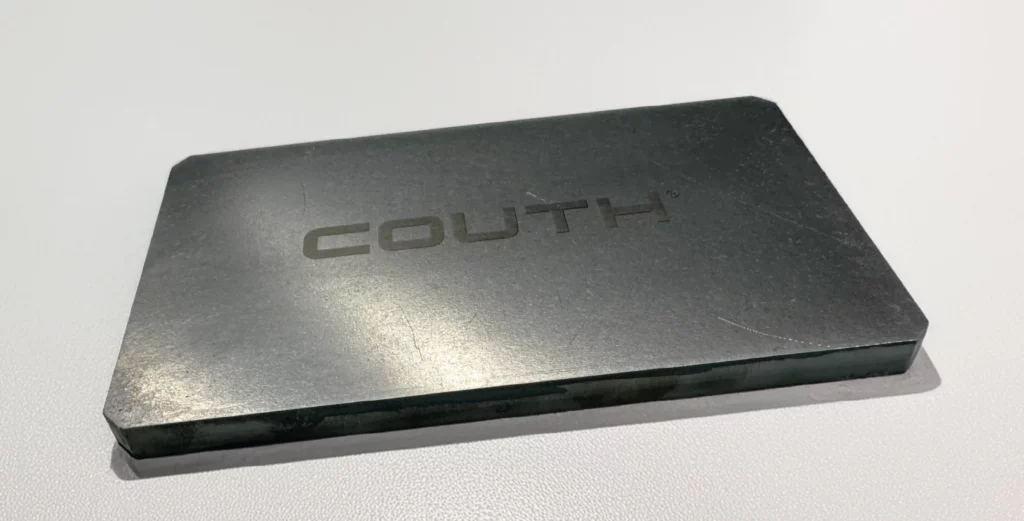
Steel can be marked using dot peen marking, scribing, or laser. Dot peen marking and scribing are suitable when depth and durability are required. Laser marking is recommended when high definition or contactless marking is desired.
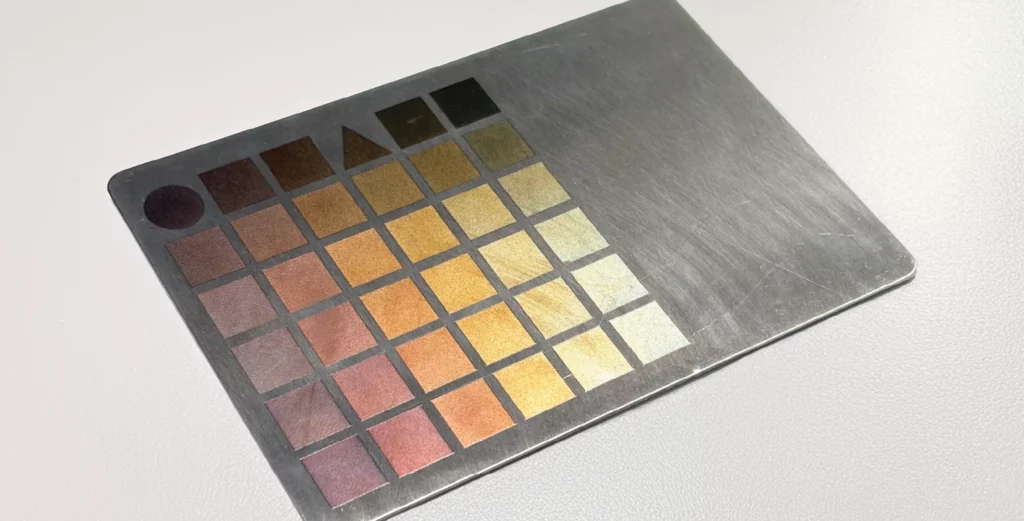
Stainless steel is compatible with all three technologies. Laser marking is suitable for clean, high-definition marks. Dot peen marking and scribing can be used on robust parts, provided that finish and corrosion requirements are validated.
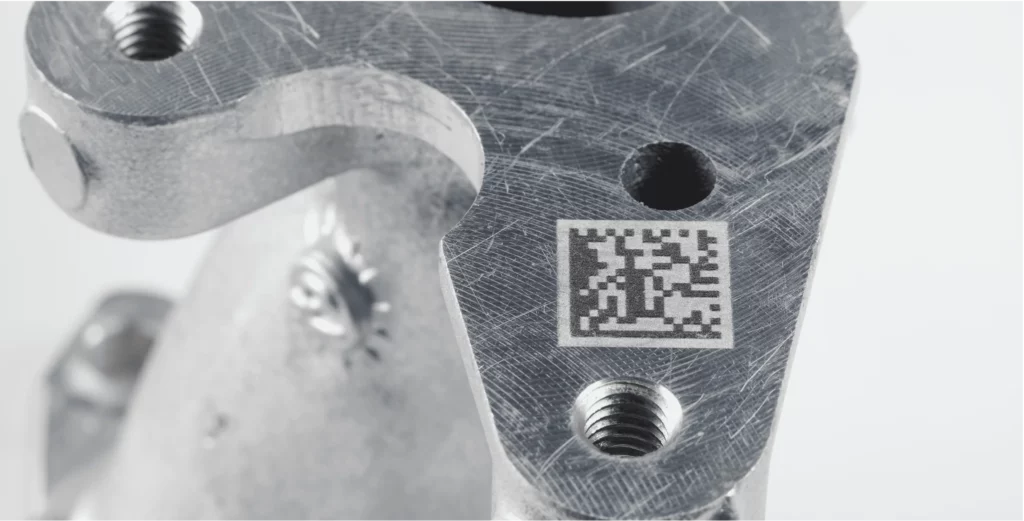
Aluminum can be marked using laser or dot peen marking, as well as by scribing on suitable parts. Force must be controlled in mechanical technologies to prevent deformation. On anodized aluminum, laser marking can provide good contrast.
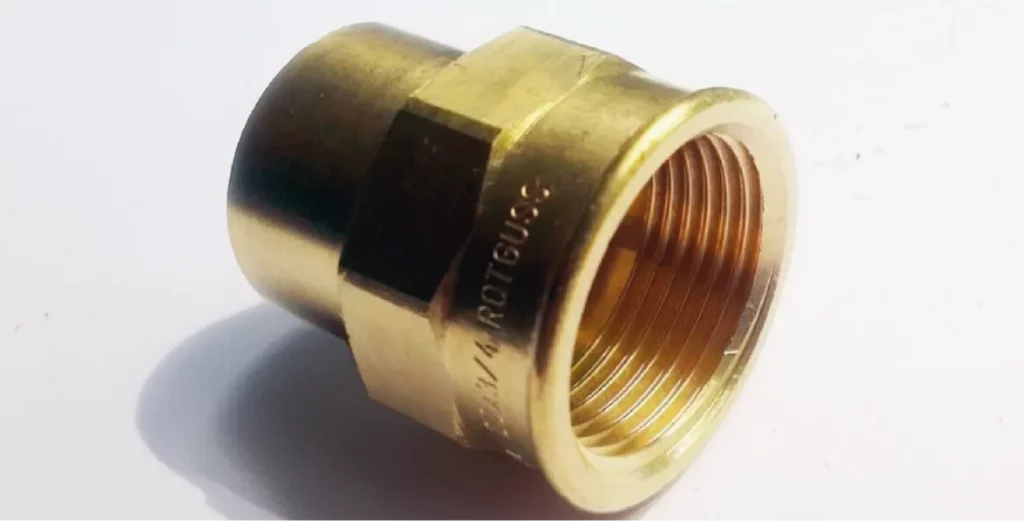
Brass can be marked using dot peen marking, engraving, or laser marking. Engraving and dot peen marking are suitable for permanent markings; laser marking may be preferable when fine detail or a better visual finish is desired.
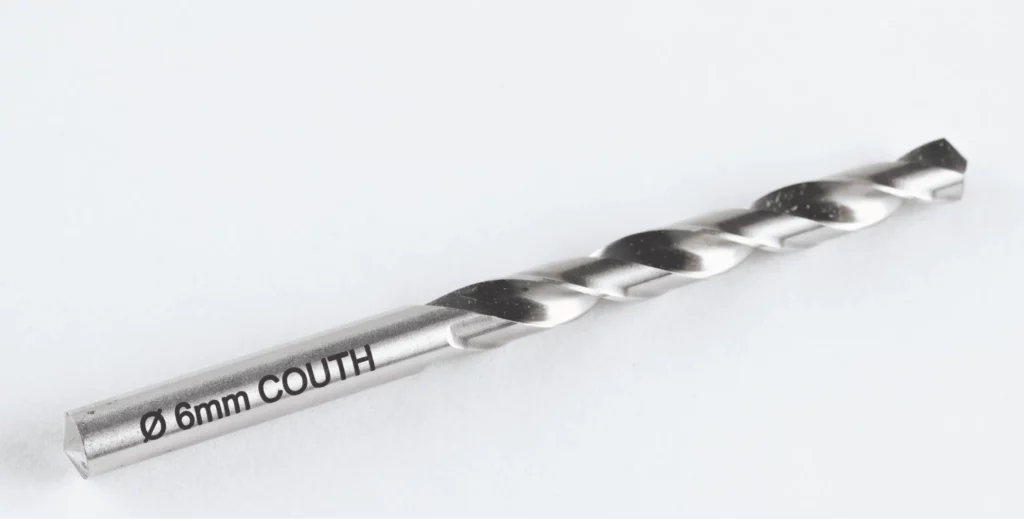
Titanium can be marked by laser and, in validated applications, by dot peen marking or scribing. The choice depends on the application, the part’s geometry, and its functional requirements.
Some engineering plastics can be marked by laser or dot peen marking, depending on their hardness, composition, and thermal response. Laser marking is usually suitable if the material provides sufficient contrast.
Laser marking can modify or remove the surface layer to create contrast. Dot peen marking and scribing can penetrate or deform the coating, but must be validated if the layer serves an aesthetic or protective function.

Alphanumeric characters can be read without specialized devices, facilitating visual inspections, maintenance, and quick checks.

When applied via dot peen marking, scribing, or laser, the mark can become integrated into the part and withstand handling, use, and industrial conditions.

Alphanumeric codes allow for the marking of fixed or variable data: serial numbers, lot numbers, dates, part numbers, shifts, suppliers, or internal identifiers.

Each mark can be linked to information regarding production, quality, lot, supplier, line, station, or maintenance.

Clear identification reduces confusion between parts, mix-ups of part numbers, and transcription errors.

Alphanumeric codes can be combined with DataMatrix, QR codes, barcodes, logos, or pictograms to facilitate both human and machine reading.

Unlike other marking types, alphanumeric codes can be applied using dot peen marking, scribing, or laser marking, allowing the solution to be tailored to the material and application.

Alphanumeric marking can be integrated into manual stations, portable devices, automated cells, or production lines.
Alphanumeric characters can be read without specialized devices, facilitating visual inspections, maintenance, and quick checks.
When applied via dot peen marking, scribing, or laser, the mark can become integrated into the part and withstand handling, use, and industrial conditions.
Alphanumeric codes allow for the marking of fixed or variable data: serial numbers, lot numbers, dates, part numbers, shifts, suppliers, or internal identifiers.
Each mark can be linked to information regarding production, quality, lot, supplier, line, station, or maintenance.
Clear identification reduces confusion between parts, mix-ups of part numbers, and transcription errors.
Alphanumeric codes can be combined with DataMatrix, QR codes, barcodes, logos, or pictograms to facilitate both human and machine reading.
Unlike other marking types, alphanumeric codes can be applied using dot peen marking, scribing, or laser marking, allowing the solution to be tailored to the material and application.
Alphanumeric marking can be integrated into manual stations, portable devices, automated cells, or production lines.
Marking a unique serial number is not the same as marking a lot code, a fixed part number, a variable date, or a VIN. The data structure determines the software, automation, and error control requirements.
The size must allow for clear readability. In confined spaces or on small parts, laser marking may be more suitable due to its precision.
The depth depends on the part’s intended use. Tools, chassis, or components subject to wear may require deeper markings than a visible data plate.
The material determines the technology used. Steel, stainless steel, aluminum, titanium, brass, or engineering plastics respond differently to marking.
Roughness, paint, anodizing, shot blasting, treatments, or coatings influence contrast, legibility, and durability.
The part’s shape determines the marking head’s access, clamping, working distance, and character quality.
The font, size, depth, contrast, and orientation must facilitate reading by operators, maintenance personnel, or inspectors.
If the mark will be read via OCR or machine vision, an appropriate font, contrast, lighting, and mark quality must be defined.
In mass production, the time available for marking may determine the technology and size of the mark.
Dust, oil, vibration, temperature, humidity, or the presence of operators influence the selection of the system.
The mark may need to withstand painting, shot blasting, cleaning, heat treatments, oils, abrasion, or subsequent assembly.
Marking a unique serial number is not the same as marking a lot code, a fixed part number, a variable date, or a VIN. The data structure determines the software, automation, and error control requirements.
The size must allow for clear readability. In confined spaces or on small parts, laser marking may be more suitable due to its precision.
The depth depends on the part’s intended use. Tools, chassis, or components subject to wear may require deeper markings than a visible data plate.
The material determines the technology used. Steel, stainless steel, aluminum, titanium, brass, or engineering plastics respond differently to marking.
Roughness, paint, anodizing, shot blasting, treatments, or coatings influence contrast, legibility, and durability.
The part’s shape determines the marking head’s access, clamping, working distance, and character quality.
The font, size, depth, contrast, and orientation must facilitate reading by operators, maintenance personnel, or inspectors.
If the mark will be read via OCR or machine vision, an appropriate font, contrast, lighting, and mark quality must be defined.
In mass production, the time available for marking may determine the technology and size of the mark.
Dust, oil, vibration, temperature, humidity, or the presence of operators influence the selection of the system.
The mark may need to withstand painting, shot blasting, cleaning, heat treatments, oils, abrasion, or subsequent assembly.
These uniquely identify each part. They are commonly used on critical components, machinery, industrial equipment, tools, and nameplates.
These link a part to a specific production run, material, supplier, shift, or date.
These identify models, variants, versions, or product families.
In the automotive industry, the VIN number uniquely identifies a vehicle or chassis. It can be marked using mechanical technologies such as dot peen marking or scribing, and in certain cases by laser if the application allows it.
Dates help track production, maintenance, warranty, technical expiration, or document traceability.
These plates may include the model, manufacturer, serial number, electrical specifications, year, warnings, or internal regulatory information.
Alphanumeric markings enable the control of inventory, calibration, usage, maintenance, and tool assignment.
Spare parts can be marked to facilitate logistics, compatibility, maintenance, and replacement tracking.
In the automotive industry, alphanumeric marking is used on VINs, engine parts, transmissions, chassis, machined components, nameplates, tools, and subassemblies. Dot peen marking and scribing are common when depth is required; laser marking can be used when precision or contactless marking is desired.
In the aerospace industry, alphanumeric codes are used to identify critical parts, machined components, nameplates, structural elements, and spare parts. The technology must be selected with consideration for material, finish, fatigue, corrosion, and traceability requirements.
In the rail industry, alphanumeric codes are used to mark spare parts, metal parts, plates, structural components, and items undergoing maintenance. Durability and long-term legibility are key factors.
In machining, casting, stamping, and metal fabrication, alphanumeric marking enables the tracking of batches, part numbers, operations, treatments, inspections, and shipments.
In industrial machinery, alphanumeric markings are used on nameplates, components, subassemblies, spare parts, frames, tools, and items undergoing maintenance.
In the energy, gas, and oil sectors, valves, flanges, pipes, plates, connections, and critical components are marked. The marking must withstand dirt, oils, cleaning, handling, and harsh environmental conditions.
In electronics, alphanumeric marking can be applied to housings, heat sinks, connectors, metal plates, plastic components, or precision parts. Laser marking is often suitable due to its high resolution and non-contact nature.
Tools, molds, dies, gauges, and assembly fixtures can be marked with alphanumeric codes for inventory control, calibration, maintenance, and traceability.
In the food and beverage industry, alphanumeric markings can be applied to nameplates, machinery components, jigs, molds, and production line parts. Cleanliness, corrosion resistance, and hygiene requirements must be taken into account.
In general industrial manufacturing, alphanumeric marking is used to identify parts, products, nameplates, equipment, spare parts, subassemblies, and tools within traceability systems.
In the automotive industry, alphanumeric marking is used on VINs, engine parts, transmissions, chassis, machined components, nameplates, tools, and subassemblies. Dot peen marking and scribing are common when depth is required; laser marking can be used when precision or contactless marking is desired.
In the aerospace industry, alphanumeric codes are used to identify critical parts, machined components, nameplates, structural elements, and spare parts. The technology must be selected with consideration for material, finish, fatigue, corrosion, and traceability requirements.
In the rail industry, alphanumeric codes are used to mark spare parts, metal parts, plates, structural components, and items undergoing maintenance. Durability and long-term legibility are key factors.
In machining, casting, stamping, and metal fabrication, alphanumeric marking enables the tracking of batches, part numbers, operations, treatments, inspections, and shipments.
In industrial machinery, alphanumeric markings are used on nameplates, components, subassemblies, spare parts, frames, tools, and items undergoing maintenance.
In the energy, gas, and oil sectors, valves, flanges, pipes, plates, connections, and critical components are marked. The marking must withstand dirt, oils, cleaning, handling, and harsh environmental conditions.
In electronics, alphanumeric marking can be applied to housings, heat sinks, connectors, metal plates, plastic components, or precision parts. Laser marking is often suitable due to its high resolution and non-contact nature.
Tools, molds, dies, gauges, and assembly fixtures can be marked with alphanumeric codes for inventory control, calibration, maintenance, and traceability.
In the food and beverage industry, alphanumeric markings can be applied to nameplates, machinery components, jigs, molds, and production line parts. Cleanliness, corrosion resistance, and hygiene requirements must be taken into account.
In general industrial manufacturing, alphanumeric marking is used to identify parts, products, nameplates, equipment, spare parts, subassemblies, and tools within traceability systems.
The choice between dot peen marking, scribing, and laser marking should be based on the material, the required depth, visual quality, the environment, and the type of part.
Dot peen marking may be recommended when:
Scribing may be recommended when:
Laser marking may be recommended when:
It is always advisable to conduct tests, especially if:
Dot peen marking may be recommended when:
Scribing may be recommended when:
Laser marking may be recommended when:
It is always advisable to conduct tests, especially if:
An industrial alphanumeric code is a combination of letters, numbers, and, in some cases, symbols, used to identify parts, lots, part numbers, serial numbers, dates, or internal traceability codes.
Serial numbers, part numbers, lots, dates, VINs, supplier codes, internal identifiers, nameplates, tools, spare parts, and industrial components can be marked.
It depends on the application. Dot peen marking is suitable for robust parts and permanent markings; engraving for deep, quiet markings; and laser for small characters, high definition, treated surfaces, or contactless marking.
Yes. Dot peen marking is a widely used technology for marking permanent serial numbers on robust metal parts, tools, machined components, and nameplates.
Yes, scribing can be suitable for VINs when a deep, continuous mark with low noise levels is required. The application must be validated based on material, depth, and manufacturer requirements.
Yes. Lasers allow for high-definition alphanumeric character marking, especially on plates, treated surfaces, delicate parts, electronic components, or applications with variable data.
Alphanumeric marking is directly readable by a person and displays letters or numbers. A DataMatrix is a 2D code that requires a scanner to interpret the information. Both can be combined on the same part.
It can be permanent when performed using dot peen marking, scribing, or laser marking. Durability depends on the material, depth, contrast, finish, and conditions of use.
Yes, some engineering plastics can be marked using laser or dot peen marking, depending on their composition, hardness, and thermal behavior. It is recommended to validate the results on actual samples.
Factors that influence legibility include character size, depth, contrast, font, surface finish, lighting, orientation, the technology used, and potential wear on the part.
Yes. Industrial marking systems can mark variable data such as serial numbers, lot numbers, dates, shifts, or part numbers generated during the production process.
It is recommended to conduct tests when the material, depth, finish, OCR readability, wear, or customer requirements are critical to the application.


Según tus respuestas, necesitamos un poco más de tiempo para darte una recomendación. Por favor, ponte en contacto con nosotros.