Industrial logo marking allows a corporate logo, emblem, symbol, or graphic identifier to be reproduced on parts, plates, tools, components, and industrial products. This type of marking is used to identify the manufacturer, enhance visual traceability, customize components, differentiate products, or incorporate permanent graphic information onto a part.
Unlike alphanumeric text or a 2D code, a logo typically includes shapes, curves, line weights, proportions, and graphic details that must be reproduced with precision. Therefore, the marking technology must be selected based on the design, material, available size, required visual finish, necessary depth, and actual production conditions.
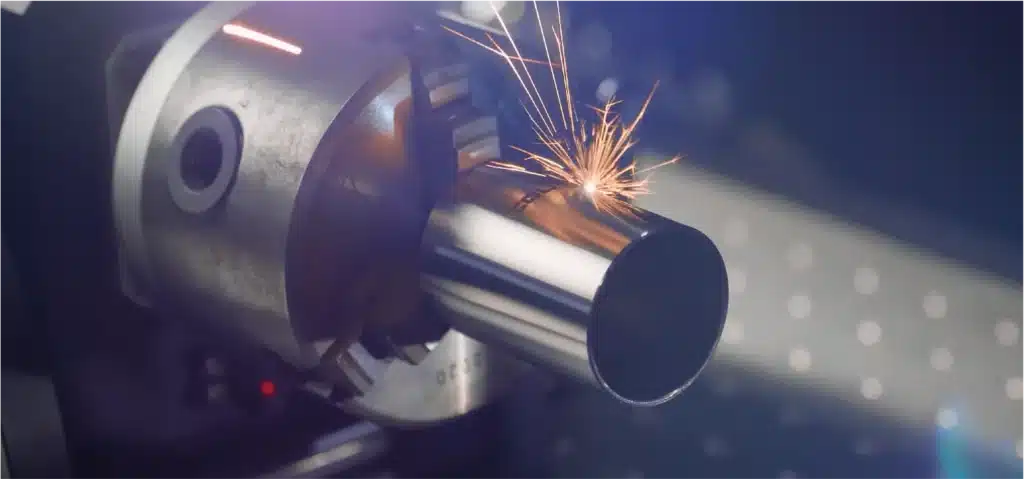
Logos can be marked using laser, dot-peen, or scribing, although not all technologies offer the same level of detail or are suitable for all designs. Laser marking is usually the best option for logos with fine detail, high visual quality, vector formats, treated surfaces, or parts that must not be subjected to mechanical contact. Dot-peen can be used for simple or robust logos on durable metal parts. Scribing can be useful for emblems or symbols consisting of continuous lines, especially when a deep and quiet mark is required.
COUTH develops industrial marking and traceability solutions using dot-peen, scribing, and laser technologies, tailored to the product, material, and technical requirements of each application. When marking industrial logos, the selection of the marking machine must take into account visual quality, the durability of the mark, and integration into the production process.

Industrial logo marking consists of permanently or durably applying a graphic representation of a brand, symbol, emblem, or visual identifier to a part or component. It can be used to indicate the manufacturer, identify a product line, incorporate a technical mark, denote industrial property, or differentiate components within a supply chain.
The logo can be marked directly onto the material or onto an identification plate attached to the product afterward. In industrial applications, the mark must maintain sufficient proportions, legibility, contrast, and durability to fulfill its function throughout the part’s service life.
Logo marking in industrial settings serves more than just an aesthetic purpose. It can also add value in terms of identification, control, traceability, maintenance, and product differentiation.
The logo allows for the recognition of the origin of a part, tool, piece of equipment, or component. This can be important for machinery, spare parts, tools, nameplates, or industrial subassemblies.
For similar parts, the logo can help differentiate product ranges, lines, versions, families, or components intended for specific customers.
On visible industrial products, nameplates, tools, or finished components, the logo reinforces the manufacturer’s corporate identity without relying on labels or stickers.
A graphic symbol or logo can help prevent parts mix-ups, confusion between manufacturers, assembly errors, or the use of incorrect components.
On replacement parts and maintenance components, the logo can facilitate visual identification of the manufacturer or supplier during inspections, repairs, or replacements.
Logos allow parts to be customized for customers, distributors, specific projects, or distinct product lines.
Although a logo does not replace a serial number, DataMatrix code, or alphanumeric identifier, it can accompany other markings to reinforce the visual identification of the part.
The feasibility of marking depends on the logo’s design, its complexity, the available size, and the technology used.
Vector logos are best suited for industrial marking because they allow the design to be scaled without loss of definition. Formats such as AI, SVG, EPS, DXF, or vector PDF are typically preferred when precision in lines, curves, and proportions is required.
Logos consisting of clear lines, solid shapes, and few details are easier to reproduce using laser, dot-peen, or engraving. They are recommended when a small or highly durable mark is needed.
Designs with fine lines, halftones, gradients, small text, or complex details usually require laser marking, as this technology allows for higher resolution and greater control.
In addition to corporate logos, manufacturer symbols, technical pictograms, safety icons, orientation marks, or industrial emblems can be marked.
It is common to combine the logo with references, serial numbers, technical data, lot codes, or DataMatrix codes. This combination allows for visual identification and technical traceability to be integrated into a single part.
Vector logos are best suited for industrial marking because they allow the design to be scaled without loss of definition. Formats such as AI, SVG, EPS, DXF, or vector PDF are typically preferred when precision in lines, curves, and proportions is required.
Logos consisting of clear lines, solid shapes, and few details are easier to reproduce using laser, dot-peen, or engraving. They are recommended when a small or highly durable mark is needed.
Designs with fine lines, halftones, gradients, small text, or complex details usually require laser marking, as this technology allows for higher resolution and greater control.
In addition to corporate logos, manufacturer symbols, technical pictograms, safety icons, orientation marks, or industrial emblems can be marked.
It is common to combine the logo with references, serial numbers, technical data, lot codes, or DataMatrix codes. This combination allows for visual identification and technical traceability to be integrated into a single part.
Logo marking can be performed using laser, dot-peen, or scribing, but the choice should be based on the level of detail in the design, the material, the required visual quality, the depth, and production conditions.
Laser marking of logos uses a concentrated beam to modify the material’s surface and reproduce the graphic design with high precision. It can produce contrast, engraving, annealing, ablation, foaming, or coating removal, depending on the material.
The laser traces or fills in the areas of the logo according to the graphic file and the defined parameters. It can work with outlines, fills, halftones, text, and vector elements. The mark is produced without mechanical contact with the part.
Laser marking of logos can be applied, subject to validation, to:
Laser marking is recommended when the logo has fine details, requires a high-quality finish, must be marked in a small size, or is applied to delicate parts. It is also the most suitable option when the logo needs to be combined with QR codes, DataMatrix codes, barcodes, or high-definition text.
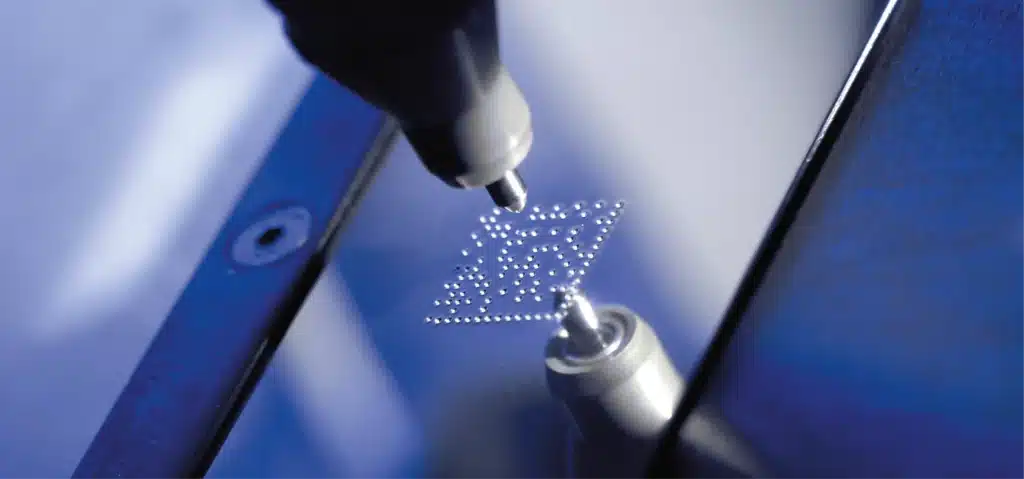
Dot-peen marking creates the mark through controlled impacts of a tip against the surface. For logos, this technology can reproduce simple designs using a series of dots.
The tip impacts the surface, following the outline or filling in the logo. The result is a dotted, permanent, and durable mark, suitable for simplified designs or those with low graphic complexity.
Dot-peen can be used on:
Dot-peen marking may be recommended when a simple logo needs to be marked on a robust part, with permanence taking priority over aesthetic quality. It is useful for tools, jigs, machined parts, industrial components, or plates where a dotted finish is acceptable.
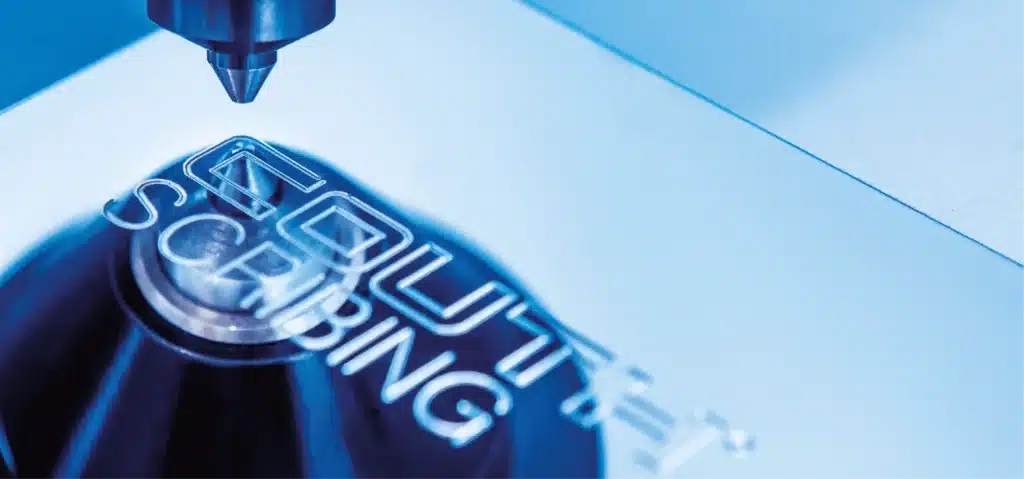
Scratch marking creates the mark using a tip that penetrates and moves across the surface, creating continuous lines. It can be used for simple logos, linear emblems, or symbols formed by outlines.
The scratching tip follows the lines of the design and creates a continuous incision. The result is a permanent, deep mark that is quieter than impact-based technologies.
Scratching can be used primarily on:
Scratching may be recommended for logos consisting of simple lines, technical symbols, or emblems with clear outlines, especially when a deep, quiet, and permanent mark is desired.
Laser marking of logos uses a concentrated beam to modify the material’s surface and reproduce the graphic design with high precision. It can produce contrast, engraving, annealing, ablation, foaming, or coating removal, depending on the material.
The laser traces or fills in the areas of the logo according to the graphic file and the defined parameters. It can work with outlines, fills, halftones, text, and vector elements. The mark is produced without mechanical contact with the part.
Laser marking of logos can be applied, subject to validation, to:
Laser marking is recommended when the logo has fine details, requires a high-quality finish, must be marked in a small size, or is applied to delicate parts. It is also the most suitable option when the logo needs to be combined with QR codes, DataMatrix codes, barcodes, or high-definition text.
Dot-peen marking creates the mark through controlled impacts of a tip against the surface. For logos, this technology can reproduce simple designs using a series of dots.
The tip impacts the surface, following the outline or filling in the logo. The result is a dotted, permanent, and durable mark, suitable for simplified designs or those with low graphic complexity.
Dot-peen can be used on:
Dot-peen marking may be recommended when a simple logo needs to be marked on a robust part, with permanence taking priority over aesthetic quality. It is useful for tools, jigs, machined parts, industrial components, or plates where a dotted finish is acceptable.
Scratch marking creates the mark using a tip that penetrates and moves across the surface, creating continuous lines. It can be used for simple logos, linear emblems, or symbols formed by outlines.
The scratching tip follows the lines of the design and creates a continuous incision. The result is a permanent, deep mark that is quieter than impact-based technologies.
Scratching can be used primarily on:
Scratching may be recommended for logos consisting of simple lines, technical symbols, or emblems with clear outlines, especially when a deep, quiet, and permanent mark is desired.
Industrial logo marking can be applied to various materials. The appropriate technology depends on the material, finish, level of detail, depth, and required visual quality.
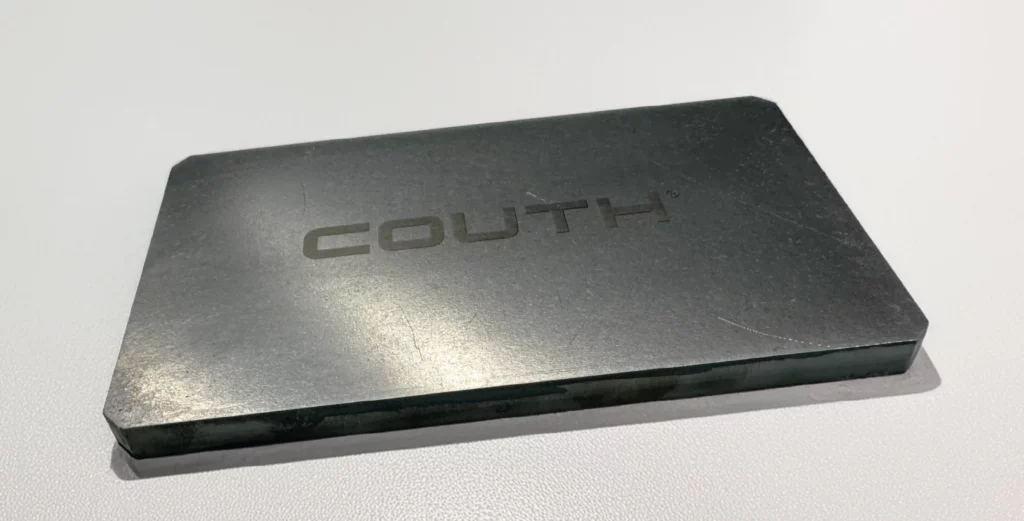
Steel can be marked using laser, dot-peen, or scratching. For detailed logos, laser marking is usually the most suitable option. Dot-peen or scratching can be used for simple designs when depth or durability is prioritized.
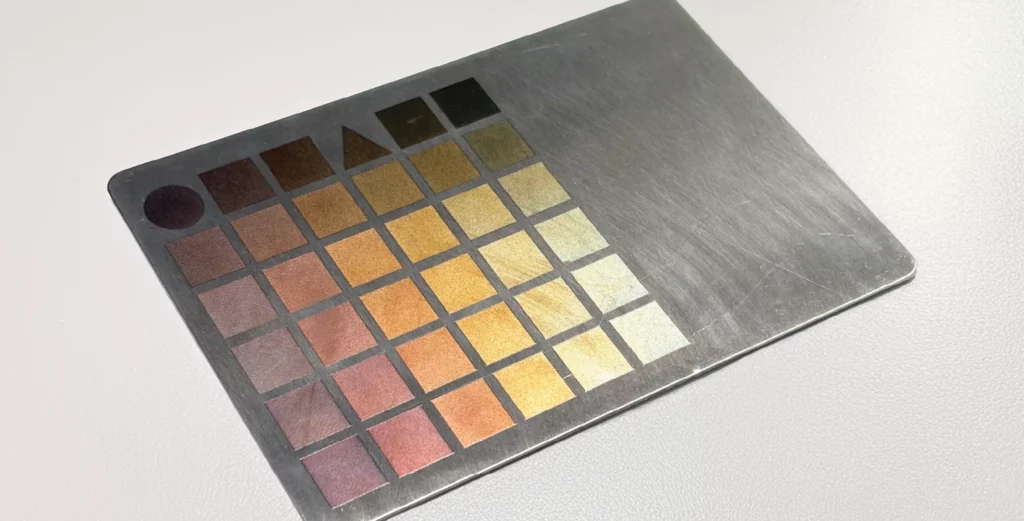
Stainless steel is compatible with all three technologies, although laser marking is usually recommended when a clean, precise, and visually refined mark is desired. In critical applications, the impact of the marking on the surface finish must be evaluated.
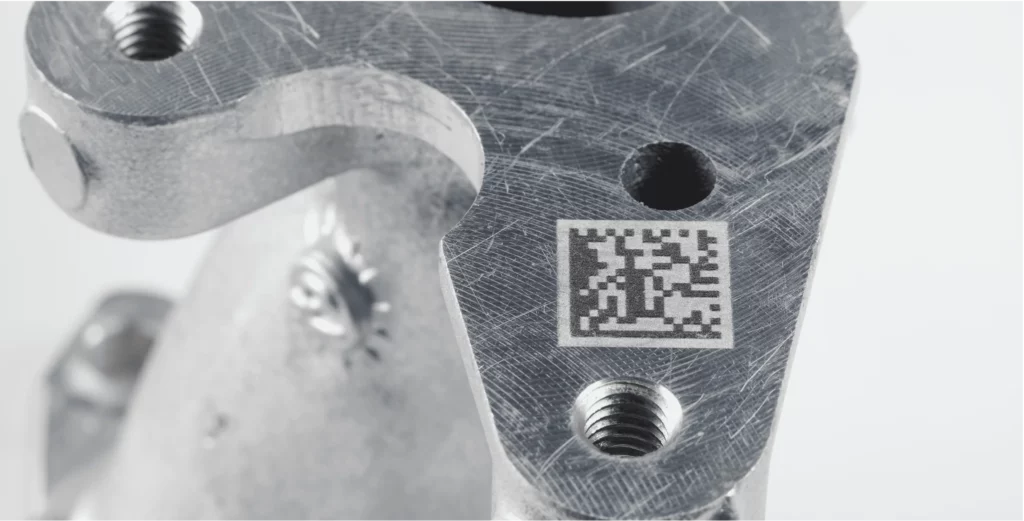
Aluminum can be marked using laser, dot-peen, or engraving. On anodized aluminum, laser marking typically offers good contrast and high definition, making it particularly suitable for logos, nameplates, faceplates, and panels.
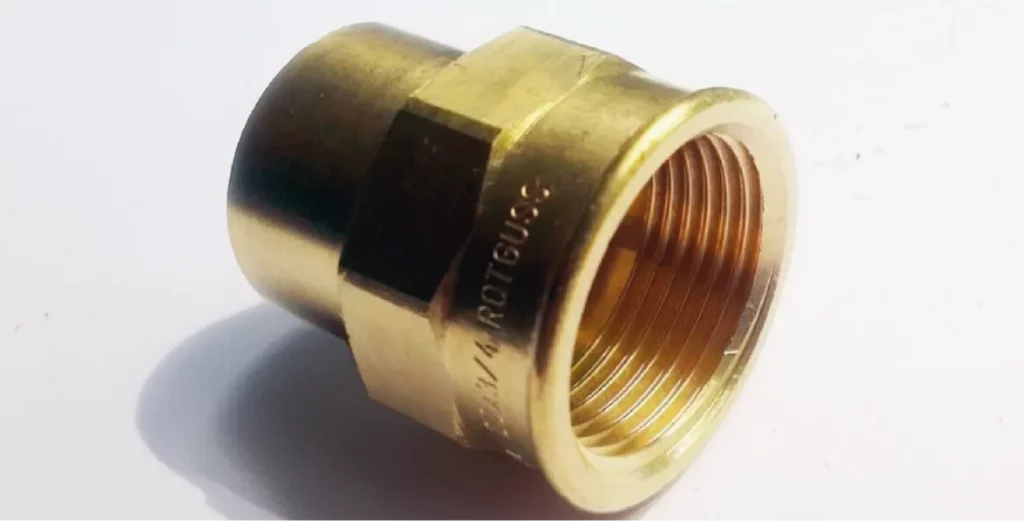
Brass can be marked using laser, dot-peen, or scribing. Laser marking is suitable for logos with visual detail; scribingcan work well for line-art emblems; dot-peen can be used for simple designs.
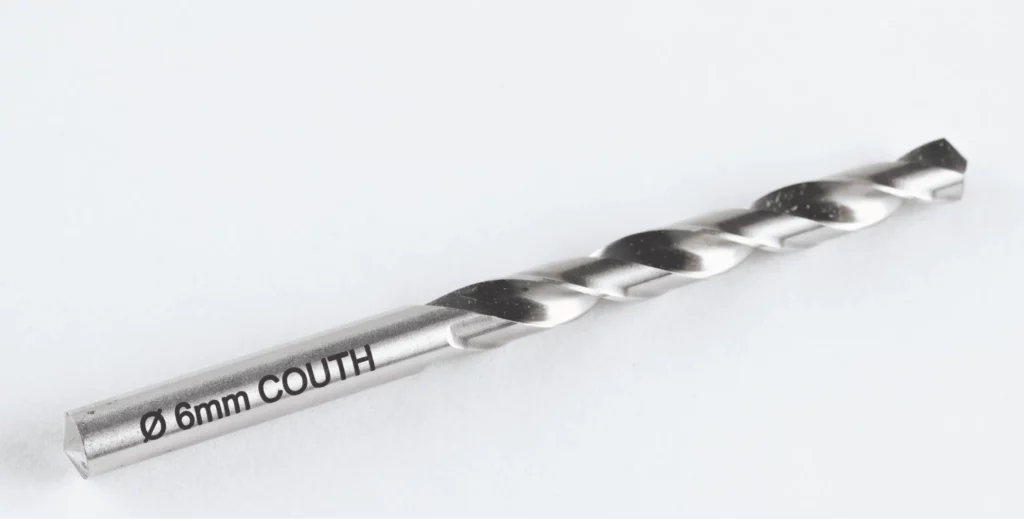
Titanium can be marked by laser and, in validated applications, by dot-peen or engraving. For precision logos, laser marking is usually preferable due to its non-contact nature and precision.
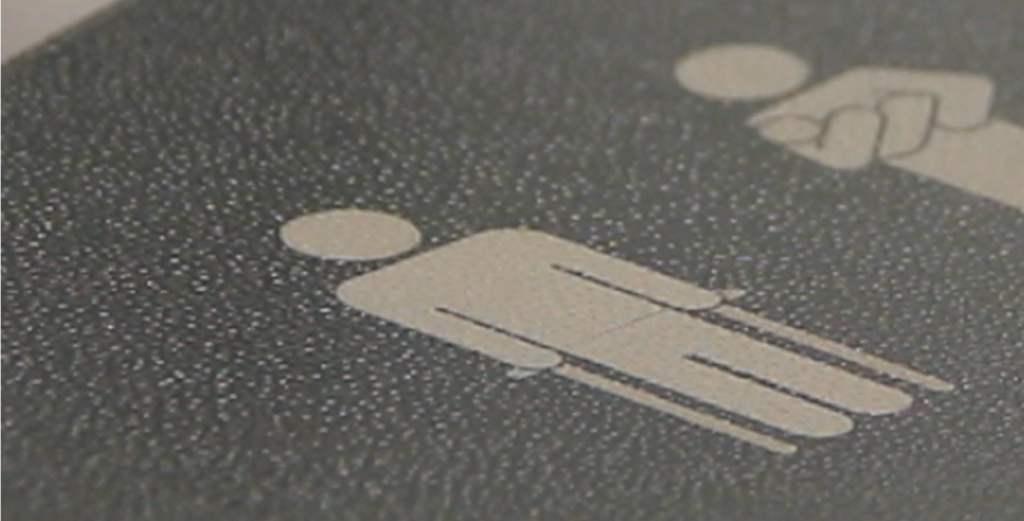
Some engineering plastics can be marked by laser if their composition allows for stable contrast. Dot-peen may be viable on sufficiently durable materials, although laser marking is usually preferred for detailed logos.
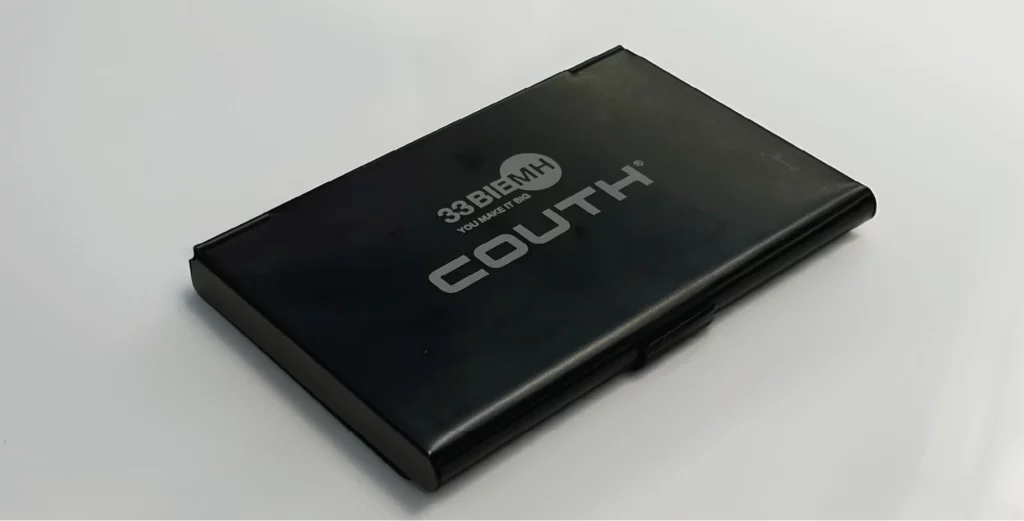
On treated surfaces, laser marking can selectively modify or remove the surface layer to create contrast. This is useful for anodized plates, faceplates, panels, painted parts, or components with coatings.
The quality of the result depends on both the technology and the source file. A logo prepared for printing or digital use is not always optimized for industrial marking.
Whenever possible, it is best to work with vector files. They allow the design to be scaled without loss of quality and facilitate the reproduction of outlines, curves, and proportions.
For small logos or those marked using mechanical technologies, it may be necessary to simplify details, remove gradients, increase minimum line weights, or adapt fonts.
Lines that are too thin, small spaces, or small text may become illegible. It is important to define the minimum mark size and validate the result on the actual part.
The design must be adapted to the contrast that can be achieved on the material. Not all colors or gradients in a digital logo can be directly transferred to a monochrome industrial mark.
Laser marking can handle both outlines and fills. Dot-peen and engraving are generally better suited for outlines or simplified designs.
Before production, it is advisable to validate the logo on an actual sample to check size, contrast, definition, depth, and durability.
Whenever possible, it is best to work with vector files. They allow the design to be scaled without loss of quality and facilitate the reproduction of outlines, curves, and proportions.
Common formats:
For small logos or those marked using mechanical technologies, it may be necessary to simplify details, remove gradients, increase minimum line weights, or adapt fonts.
Lines that are too thin, small spaces, or small text may become illegible. It is important to define the minimum mark size and validate the result on the actual part.
The design must be adapted to the contrast that can be achieved on the material. Not all colors or gradients in a digital logo can be directly transferred to a monochrome industrial mark.
Laser marking can handle both outlines and fills. Dot-peen and engraving are generally better suited for outlines or simplified designs.
Before production, it is advisable to validate the logo on an actual sample to check size, contrast, definition, depth, and durability.

The logo is integrated into the part or plate, reducing reliance on labels, stickers, or external elements.

It keeps the manufacturer’s or supplier’s brand visible on tools, machinery, spare parts, plates, or final products.

Logo marking allows parts to be customized for customers, distributors, special series, or specific projects.

Direct marking can better withstand handling, cleaning, wear and tear, temperature, or environmental exposure than a conventional label, provided the appropriate technology is used.

The logo can be combined with DataMatrix codes, QR codes, serial numbers, part numbers, or lot numbers to combine visual identification with technical traceability.

Logos can be marked on metals, engineering plastics, anodized surfaces, painted parts, or treated plates, subject to prior validation.

Especially with laser marking, it is possible to reproduce designs with high definition, clean edges, and good contrast.
The logo is integrated into the part or plate, reducing reliance on labels, stickers, or external elements.
It keeps the manufacturer’s or supplier’s brand visible on tools, machinery, spare parts, plates, or final products.
Logo marking allows parts to be customized for customers, distributors, special series, or specific projects.
Direct marking can better withstand handling, cleaning, wear and tear, temperature, or environmental exposure than a conventional label, provided the appropriate technology is used.
The logo can be combined with DataMatrix codes, QR codes, serial numbers, part numbers, or lot numbers to combine visual identification with technical traceability.
Logos can be marked on metals, engineering plastics, anodized surfaces, painted parts, or treated plates, subject to prior validation.
Especially with laser marking, it is possible to reproduce designs with high definition, clean edges, and good contrast.
In the automotive industry, logos can be marked on metal parts, plates, tools, jigs, engine components, subassemblies, or visible parts. Laser marking is suitable for fine details and precise finishes; dot-peen or scribing can be used for simple logos on robust parts.
In the aeronautics industry, logos can be marked on nameplates, technical components, tools, jigs, or maintenance parts. The technology must be selected based on material, finish, weight, corrosion, fatigue, and documentation requirements.
In the rail industry, logos can be used on nameplates, spare parts, metal components, tools, or maintenance equipment. Long-term durability and legibility are important factors.
In machining, casting, stamping, or metal fabrication, logos can be marked on parts, plates, tools, jigs, and components manufactured for third parties. The type of marking machine will depend on the material, finish, and level of detail.
In industrial machinery, logo marking is used on manufacturer nameplates, frames, subassemblies, housings, replacement parts, and equipment. It allows for the identification of origin, brand, and associated documentation.
In the energy, gas, and oil sectors, logos can be marked on nameplates, valves, flanges, tools, replacement parts, or technical components. The marking must withstand handling, oils, dirt, cleaning, and harsh environmental conditions.
In electronics, logos can be marked on housings, connectors, heat sinks, circuit boards, panels, or plastic and metal components. Lasers are often particularly well-suited due to their precision and non-contact nature.
Tools, molds, dies, gauges, and assembly fixtures can be marked with logos to identify the manufacturer, ownership, product line, or customer.
In the automotive industry, logos can be marked on metal parts, plates, tools, jigs, engine components, subassemblies, or visible parts. Laser marking is suitable for fine details and precise finishes; dot-peen or scribing can be used for simple logos on robust parts.
In the aeronautics industry, logos can be marked on nameplates, technical components, tools, jigs, or maintenance parts. The technology must be selected based on material, finish, weight, corrosion, fatigue, and documentation requirements.
In the rail industry, logos can be used on nameplates, spare parts, metal components, tools, or maintenance equipment. Long-term durability and legibility are important factors.
In machining, casting, stamping, or metal fabrication, logos can be marked on parts, plates, tools, jigs, and components manufactured for third parties. The type of marking machine will depend on the material, finish, and level of detail.
In industrial machinery, logo marking is used on manufacturer nameplates, frames, subassemblies, housings, replacement parts, and equipment. It allows for the identification of origin, brand, and associated documentation.
In the energy, gas, and oil sectors, logos can be marked on nameplates, valves, flanges, tools, replacement parts, or technical components. The marking must withstand handling, oils, dirt, cleaning, and harsh environmental conditions.
In electronics, logos can be marked on housings, connectors, heat sinks, circuit boards, panels, or plastic and metal components. Lasers are often particularly well-suited due to their precision and non-contact nature.
Tools, molds, dies, gauges, and assembly fixtures can be marked with logos to identify the manufacturer, ownership, product line, or customer.
The choice between laser, dot-peen, and engraving depends on the logo design, material, depth, visual quality, and the environment in which it will be used.
Laser marking may be recommended when:
Dot-peen may be recommended when:
Scratching may be recommended when:
It is always advisable to conduct tests, especially if:
Laser marking may be recommended when:
Dot-peen may be recommended when:
Scratching may be recommended when:
It is always advisable to conduct tests, especially if:
Yes. A logo can be marked on industrial parts, plates, tools, or components using laser, dot-peen, or engraving, depending on the design, material, size, and required visual quality.
It depends on the logo and the application. Laser marking is usually the best option for detailed, small logos, or those requiring high visual quality. Dot-peen can be used for simple logos on sturdy parts. Scribing is suitable for linear or outline logos when depth is required.
Yes. Laser marking is a highly suitable technology for marking industrial logos, especially when definition, contrast, precision, and the absence of mechanical contact are required.
Yes, provided the design is simple and the dotted finish is acceptable. Dot-peen may be suitable for functional logos on sturdy metal parts.
Yes, in certain cases. Scribing can be used for logos consisting of lines, outlines, or simple symbols, especially when a deep mark with low noise levels is required.
Vector formats are recommended, such as AI, SVG, EPS, DXF, or vector PDF. They allow the design to be scaled while preserving proportions, curves, and outlines with greater precision.
Yes. Stainless steel can be marked using laser, dot-peen, or scribing. For logos with high visual quality, laser marking is usually the best option.
Yes. Anodized aluminum can be laser-marked to produce logos with good contrast and definition. This is common on nameplates, panels, covers, and visible components.
Yes. It is common to combine the logo with serial numbers, part numbers, DataMatrix codes, QR codes, lot numbers, or technical text to integrate visual identification and traceability.
It can be permanent if the appropriate technology is used for the material and application. Durability will depend on depth, contrast, surface finish, and conditions of use.
Sometimes, yes. If the logo has very small details, gradients, fine lines, or complex typefaces, it may need to be simplified to ensure legibility and reproducibility.
Yes. It is advisable to validate the marking on an actual sample to check size, contrast, definition, depth, durability, and compatibility with the material.


Según tus respuestas, necesitamos un poco más de tiempo para darte una recomendación. Por favor, ponte en contacto con nosotros.