Applications · Types of Markings · Barcodes and QR codes

Industrial Barcode and QR Code Marking for Traceability

Laser marking of barcodes and QR codes allows for the identification of parts, products, nameplates, components, and subassemblies using codes that can be read by scanners, 2D readers, cameras, or vision systems. These codes facilitate traceability, production control, inventory management, process automation, and the connection between the physical product and the company’s digital systems.

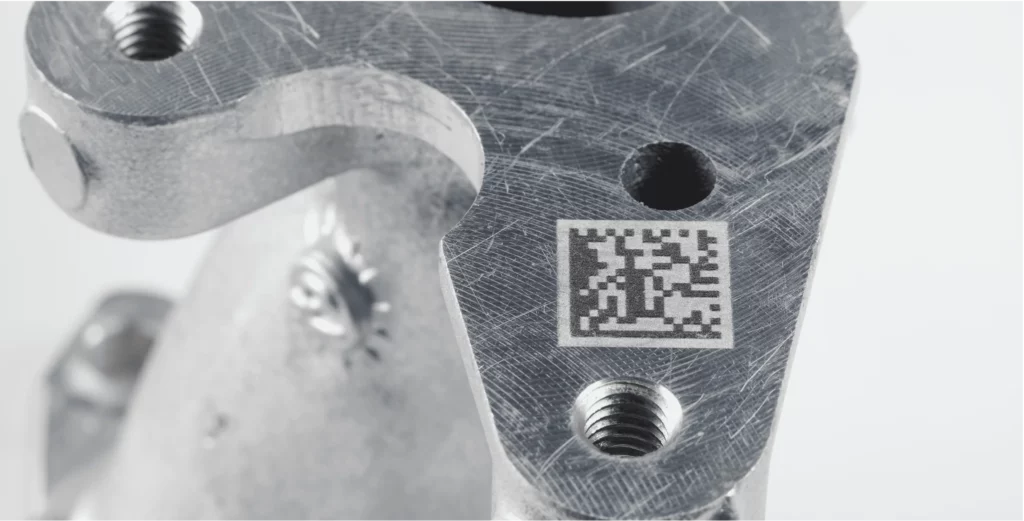
In industrial settings, barcodes and QR codes can be used to encode part numbers, serial numbers, lot numbers, dates, unique identifiers, locations, maintenance instructions, or links to technical documentation. When marked directly onto the part using laser technology, the identification can be maintained throughout the component’s manufacturing, assembly, transportation, maintenance, or lifecycle.

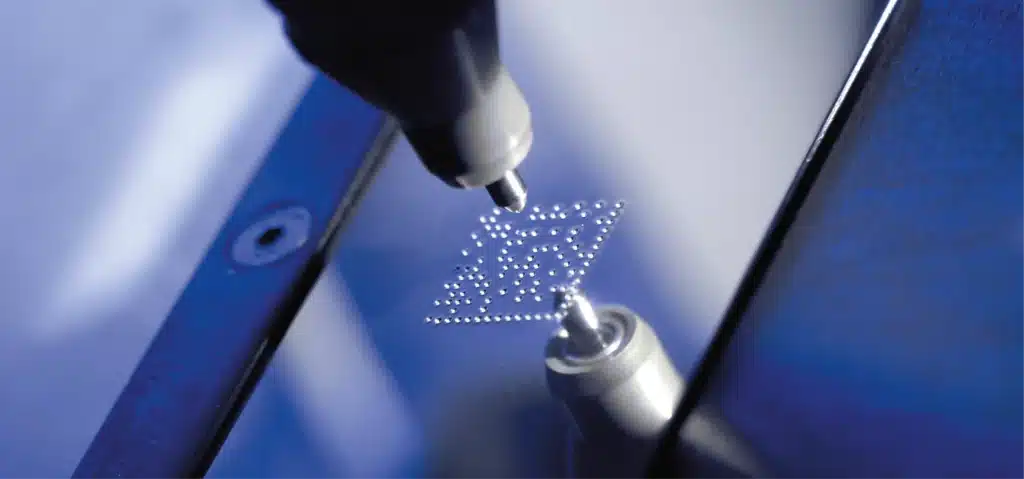
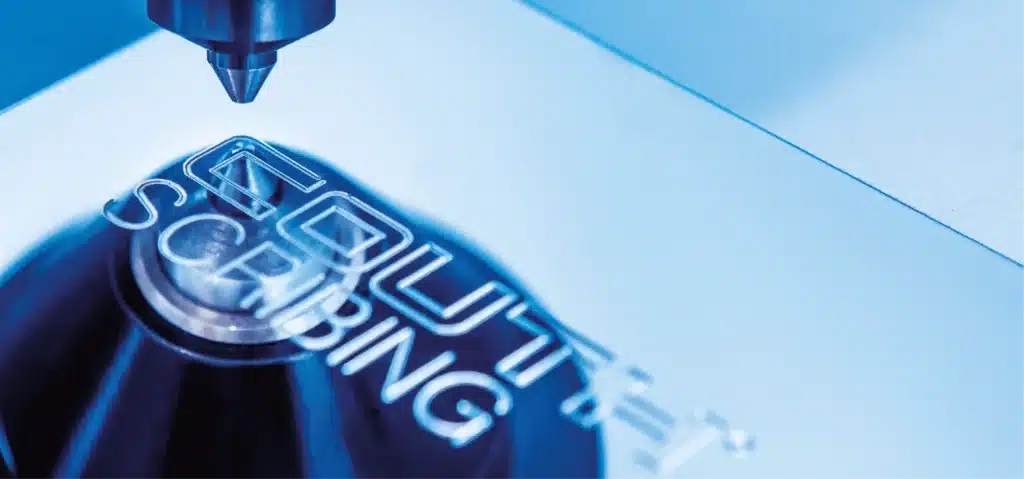
For this type of marking, the appropriate technology is laser marking. Barcodes and QR codes require high definition, precise edges, sufficient contrast, and reliable readability. For this reason, dot-peen or scribeing are not considered suitable applications for this type of marking. Dot-peen and scribeing may be appropriate technologies for other permanent markings, such as alphanumeric text, serial numbers, deep markings, or mechanical identifiers, but they are not the right choice for barcodes and QR codes.

COUTH develops industrial marking and traceability solutions using various technologies. For marking barcodes and QR codes, the solution must rely on laser markers capable of generating precise, high-contrast marks that are compatible with automatic reading systems.

line

What Are Barcodes and QR Codes in Industrial Settings

Barcodes and QR codes are visual identification systems that allow information to be encoded in a format readable by automated systems. Their primary function is to facilitate rapid data capture and reduce errors associated with manual reading or operator data entry.

In industrial applications, these codes can be used on nameplates, directly marked parts, packaging, components, tools, fixtures, or subassemblies.

An industrial barcode is a one-dimensional (1D) code consisting of bars and spaces of varying thicknesses. It is used to identify products, part numbers, lots, locations, orders, packaging, tools, or parts when the information to be encoded is relatively simple and the surface allows for linear scanning.

Barcodes are commonly used in logistics, warehouses, shipping, inventory management, product identification, batch control, and process tracking.

An industrial QR code is a two-dimensional (2D) code capable of storing more information than a linear barcode. It can contain text, numbers, identifiers, links, instructions, internal references, or keys linked to a database.

In industry, QR codes are used when there is a need to encode more information in less space, facilitate reading from different orientations, or link the part to technical documentation, maintenance records, traceability systems, or digital platforms.

line

Differences Between Barcodes and QR Codes

Barcodes and QR codes serve a common function: identifying and encoding information. However, they have significant differences in capacity, readability, size, scanning orientation, and industrial applications.

Criterion

Barcode 

QR Code

Code type 

1D, lineal

2D, matrix

Information capacity

Low or medium

High

Space required

Greater horizontal length

More compact

Scanning

Typically linear

Multidirectional

Common uses

Inventory, logistics, products, batches 

Advanced traceability, documentation, maintenance, digital access

Direct application to parts

Possible via laser, if there is sufficient contrast and space 

Highly suitable via laser when precision and automatic reading are required

Suitability for small surfaces 

Limited

Greater

Resistance to partial damage

Lower

Greater, depending on configuration and error correction

Readers

1D scanner or compatible reader

2D reader, camera, or industrial smartphone

Use in industrial traceability

High

High, especially in digital processes

In general, barcodes are suitable for simple, linear, and quick-to-read identifications. QR codes are more suitable when more information needs to be stored, when working with smaller surfaces, or when connecting the part to digital systems.

line

What Barcodes and QR Codes Are Used For in Industry

Barcode and QR code marking is used to improve identification, reduce errors, and automate data capture in industrial environments.

Compatible marking technology: laser marking

For barcodes and QR codes, compatible technology is laser marking. These codes require sufficient geometric definition, contrast, dimensional stability, and precision so that the scanner can correctly interpret bars, spaces, or modules.

Laser technology allows for the marking of high-resolution codes on various industrial materials, provided that the material, surface finish, and process parameters are appropriate.

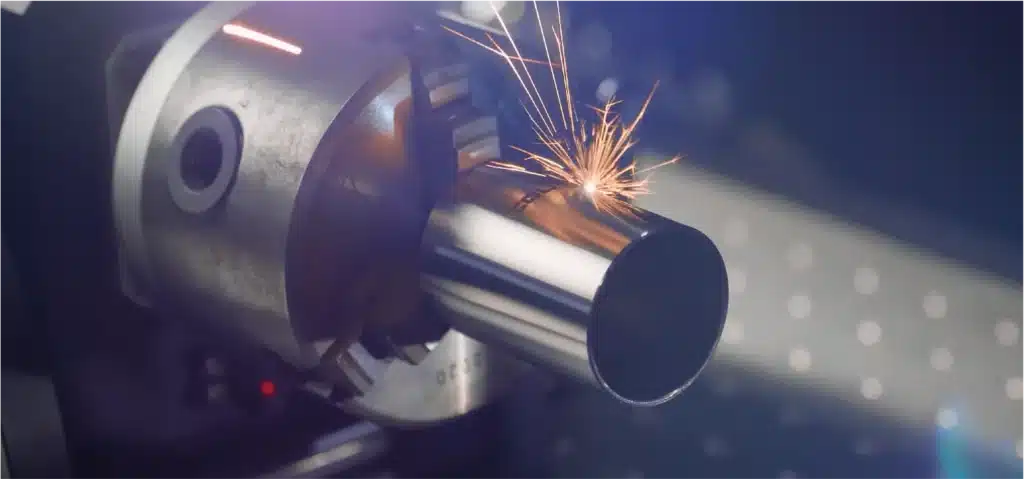
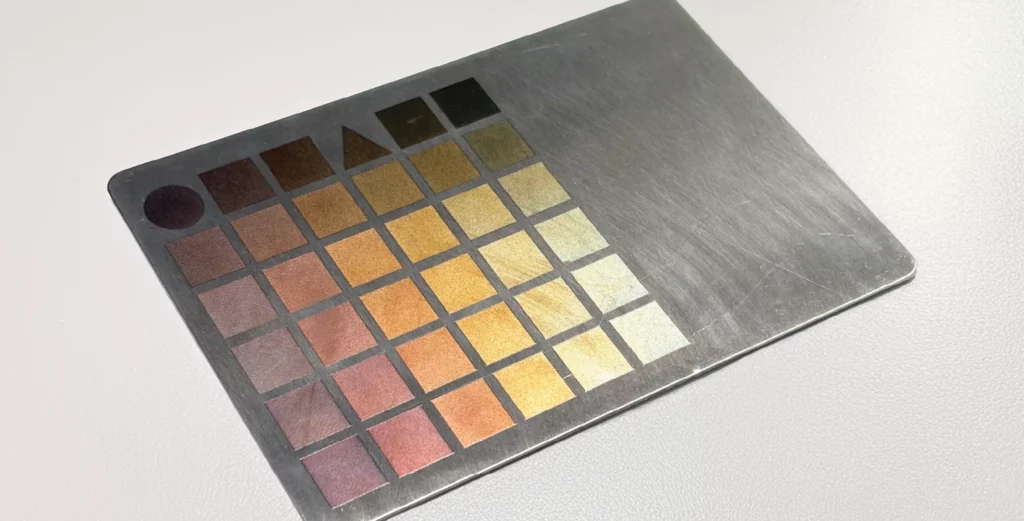
Laser marking uses a concentrated beam of light to modify the material’s surface. It can create contrast, engraving, ablation, annealing, foaming, or coating removal, depending on the material and process parameters.

For barcodes and QR codes, laser marking is the ideal technology because it allows for precise control of the code’s geometry, creates sharp edges, and supports variable data in industrial processes.

How Marking Is Performed

The laser modifies specific areas of the surface to form the code’s bars, spaces, modules, or cells. In QR codes, each module must be clearly defined. In barcodes, the bars and spaces must maintain precise proportions and sufficient contrast for the scanner.

Common materials or parts

Laser marking of barcodes and QR codes can be applied, subject to validation, to:

  • Steel.
  • Stainless steel.
  • Aluminum.
  • Anodized aluminum.
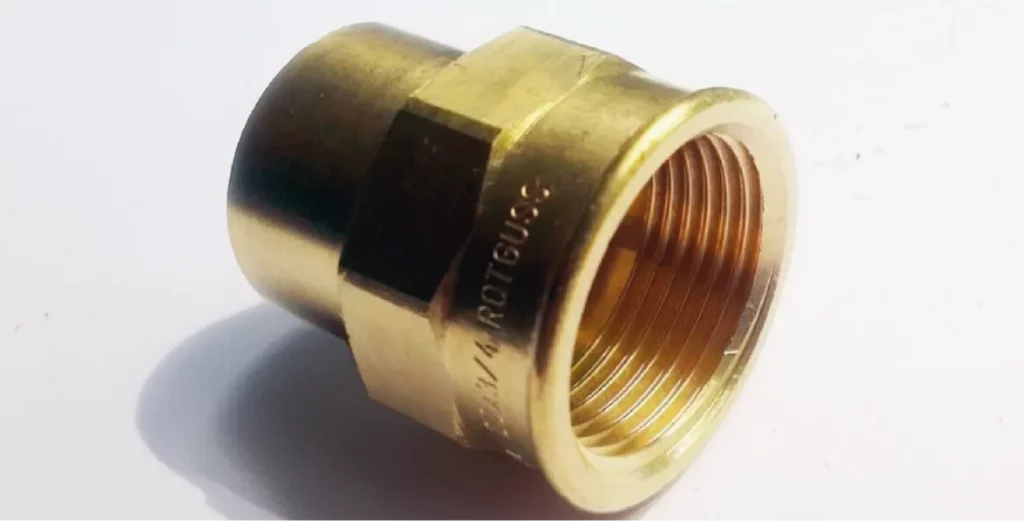
  • Brass.
  • Titanium.
  • Copper and alloys, subject to validation.
  • Plastics.
  • Painted surfaces.
  • Treated or coated surfaces.
  • Electronic components.

Advantages

  • High definition.
  • Good contrast on compatible materials.
  • Contactless marking.
  • Suitable for small codes.
  • Excellent option for readable QR codes and barcodes.
  • Low mechanical wear.
  • Integration with readers and vision systems.
  • Suitable for automation and variable data.
  • Allows for marking text, logos, 1D codes, 2D codes, and associated references.
  • Enables permanent, label-free identification in compatible applications.

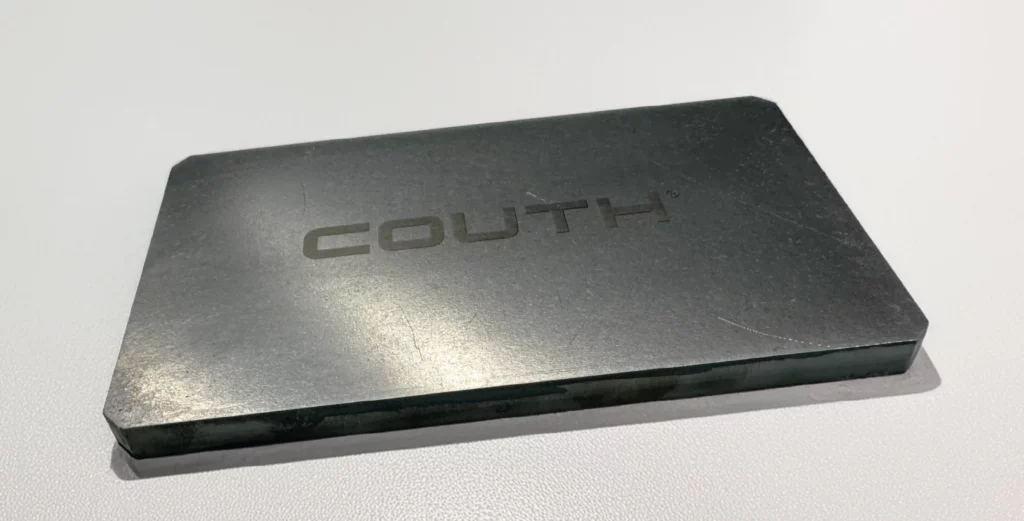
Laser marking is recommended when high-visual-quality barcodes or QR codes, stable automatic reading, small dimensions, contactless marking, or integration into production lines are required. It is also suitable for plates, anodized surfaces, electronic components, precision parts, and applications where aesthetics or contrast are important.

  • Requires specific safety measures.
  • The response depends on the material and surface finish.
  • May require fume or particle extraction.
  • The initial investment may be higher than that of mechanical technologies.
  • On reflective or highly conductive materials, the process must be validated.
  • The durability of the mark must be verified if the part will undergo subsequent treatments.
  • Code readability depends on contrast, size, resolution, lighting, and the reading system.

Laser marking uses a concentrated beam of light to modify the material’s surface. It can create contrast, engraving, ablation, annealing, foaming, or coating removal, depending on the material and process parameters.

For barcodes and QR codes, laser marking is the ideal technology because it allows for precise control of the code’s geometry, creates sharp edges, and supports variable data in industrial processes.

How Marking Is Performed

The laser modifies specific areas of the surface to form the code’s bars, spaces, modules, or cells. In QR codes, each module must be clearly defined. In barcodes, the bars and spaces must maintain precise proportions and sufficient contrast for the scanner.

Common materials or parts

Laser marking of barcodes and QR codes can be applied, subject to validation, to:

  • Steel.
  • Stainless steel.
  • Aluminum.
  • Anodized aluminum.
  • Brass.
  • Titanium.
  • Copper and alloys, subject to validation.
  • Plastics.
  • Painted surfaces.
  • Treated or coated surfaces.
  • Electronic components.
Advantages
  • High definition.
  • Good contrast on compatible materials.
  • Contactless marking.
  • Suitable for small codes.
  • Excellent option for readable QR codes and barcodes.
  • Low mechanical wear.
  • Integration with readers and vision systems.
  • Suitable for automation and variable data.
  • Allows for marking text, logos, 1D codes, 2D codes, and associated references.
  • Enables permanent, label-free identification in compatible applications.

Laser marking is recommended when high-visual-quality barcodes or QR codes, stable automatic reading, small dimensions, contactless marking, or integration into production lines are required. It is also suitable for plates, anodized surfaces, electronic components, precision parts, and applications where aesthetics or contrast are important.

  • Requires specific safety measures.
  • The response depends on the material and surface finish.
  • May require fume or particle extraction.
  • The initial investment may be higher than that of mechanical technologies.
  • On reflective or highly conductive materials, the process must be validated.
  • The durability of the mark must be verified if the part will undergo subsequent treatments.
  • Code readability depends on contrast, size, resolution, lighting, and the reading system.
line

Materials Compatible with Laser Barcode and QR Code Marking

Barcodes and QR codes can be applied to various industrial materials using a laser. Actual compatibility depends on the material, surface finish, contrast, required durability, and reading system.

line

Types of Information That Barcodes or QR Codes Can Contain

Barcodes and QR codes can contain or link to various types of industrial information. The choice of format depends on the volume of data, the scanning system, and the traceability architecture.

Common Information in Barcodes

  • Product part numbers.
  • Lot numbers.
  • Warehouse identifiers.
  • Order codes.
  • Packaging codes.
  • Product identification.
  • Logistics locations.
  • Internal manufacturing codes.

Common information in QR codes

  • Serial numbers.
  • Unique identifiers.
  • Part numbers.
  • Batch data.
  • Links to technical documentation.
  • Maintenance instructions.
  • Warranty information.
  • Service history.
  • Access to technical data sheets.
  • Keys linked to MES, ERP, or database systems.
  • Production control information.

In industrial applications, it is generally recommended that the code contain a unique identifier and that the rest of the information be managed in a database. This prevents codes from becoming excessively dense and makes it easier to update information without modifying the physical mark.

line

Advantages of Laser Marking of Barcodes and QR Codes

Alta definición del código

High-Definition Codes

The laser enables the precise generation of bars, spaces, and modules, which enhances the code’s readability and compatibility with automatic readers.

Identificación permanente

Rapid Identification

The codes allow for the rapid identification of parts or products using scanners, cameras, or 2D readers, reducing data capture time.

Mejora de la trazabilidad

Improved traceability

Each code can be linked to information on production, quality, batch, supplier, date, line, station, or maintenance.

Reducción de errores

Error reduction

Automatic reading reduces transcription errors, confusion between part numbers, and manual identification errors.

Integración con sistemas digitales

Integration with digital systems

The codes can be connected to MES systems, ERP systems, databases, maintenance platforms, or production control systems.

Marcado directo sin etiquetas

Direct Marking Without Labels

When applied directly to the part, they can eliminate the need for labels, stickers, or external tags in applications where permanence is required.

Lectura automatizada

Process Automation

Scanning codes can trigger operations, validate part numbers, record data, sort products, or flag non-conforming parts.

Acceso a información ampliada

Access to Additional Information

In the case of QR codes, the code can provide access to technical documentation, instructions, history, or associated records.

Compatibilidad con datos variables

Compatibility with Variable Data

Laser marking can generate unique codes for each part, batch, shift, or part number, facilitating individualized traceability.

Marcado sin contacto

Non-contact marking

The laser exerts no mechanical pressure on the part, which is useful for delicate components, treated surfaces, or parts that must not be deformed.

Technical considerations

Code type

Not all codes have the same requirements. A barcode requires length and linear contrast. A QR code requires module definition, a quiet zone, and a matrix that is readable from different orientations.

Amount of Information

The more information that is encoded, the higher the density may need to be. In QR codes, an excess of data can result in smaller modules and make reading difficult if the surface area is limited.

Available Size

The marking area must accommodate the minimum code size and the intended reading distance. On small parts, a QR code or DataMatrix is usually more suitable than a linear barcode.

Contrast

Contrast between the mark and the background is essential. It can be achieved through color change, engraving, coating removal, controlled oxidation, or laser surface modification.

Marking resolution

The resolution must be sufficient for the QR modules or barcode bars to be generated accurately. If the code is too small or dense, it may lose legibility.

Surface Finish

Rough, polished, painted, anodized, oxidized, or treated surfaces can affect readability. The laser process must be adapted to the part’s actual surface finish.

Reading System

It is necessary to determine whether the code will be read by a 1D scanner, 2D reader, industrial camera, smartphone, machine vision system, or an inline fixed reader.

Lighting

When marking directly onto a part, lighting is critical. A mark visible to the naked eye may not be readable by a reader if the contrast or reflection is inadequate.

Production Speed

Cycle time determines the code size, data density, marking strategy, and integration of the laser system.

In-line Integration

The laser marker must be able to communicate with a PLC, database, traceability software, or production system when generating variable codes.

Mark Durability

It must be assessed whether the part will be exposed to abrasion, oils, greases, temperature, humidity, cleaning, painting, shot blasting, or post-processing.

Laser Safety

Laser marking requires appropriate safety measures, protection of the work area, and, when necessary, fume or particle extraction.

line

Industrial Applications of Barcodes and QR Codes

line

Applications by Industry

Automotive

In the automotive industry, barcodes and QR codes can be used to identify parts, subassemblies, packaging, tools, nameplates, and components. They enable the tracking of lots, part numbers, assembly operations, inspections, and supplier traceability. Laser marking is suitable when high definition, automatic reading, and integration into production processes are required.

Aeronautics

In the aeronautics industry, identification must be reliable and traceable over long lifecycles. Codes can be linked to documentation, inspections, serial numbers, maintenance, and the control of critical components. Laser technology must be carefully selected and validated to avoid compromising the material or finish of the part.

Rail

In the rail industry, codes can be marked on metal parts, plates, spare parts, and components undergoing maintenance. The durability of the mark and long-term legibility are important factors.

Metallurgy and Machining

In machining, casting, stamping, or metal fabrication, codes enable the identification of parts from early stages, the monitoring of operations, the recording of inspections, and the management of shipments.

Industrial Machinery

Barcodes and QR codes can be marked on plates, components, spare parts, subassemblies, frames, and tools. A QR code can link the part to technical documentation, maintenance records, or service history.

Energy, Gas, and Oil

In the energy, gas, and oil sectors, codes can be applied to valves, flanges, pipes, plates, spare parts, or components exposed to harsh environments. It is necessary to validate durability, readability, and compatibility with environmental conditions.

Electronics

In electronics, QR codes and barcodes can be used on enclosures, circuit boards, connectors, heat sinks, packaging, or components. Laser marking is particularly well-suited due to its precision and ability to handle small codes.

How to Choose the Right Laser Solution

When selecting a laser marker for barcodes and QR codes, consider the type of code, the material, the available size, contrast, resolution, the environment, and subsequent readability.

Laser marking is recommended when:

  • Barcodes or QR codes need to be marked.
  • High definition is required.
  • The code is small or high-density.
  • Automatic reading is a priority.
  • Contactless marking is needed.
  • The material provides good contrast with the laser.
  • You are working with anodized, painted, or treated surfaces.
  • The production line requires speed and integration.
  • Variable codes are marked during production.
  • You are looking to reduce dependence on labels or consumables.

It is advisable to conduct tests when:

  • The code must be read automatically.
  • The surface is rough, reflective, or treated.
  • The code is small.
  • High production speed is required.
  • The part will be subject to wear or subsequent processes.
  • Special materials are used.
  • The marking must meet internal or customer requirements.
  • It will be integrated with fixed readers or vision systems.
  • The material may produce low contrast or reflections.

To define a laser marking solution for barcodes or QR codes, please provide the following:

  • Part material.
  • Surface finish.
  • Dimensions and geometry.
  • Area available for marking.
  • Code type: barcode, QR code, or other.
  • Amount of information to be encoded.
  • Minimum and maximum allowed size.
  • Reading distance and system.
  • Verification requirements.
  • Cycle time.
  • Production volume.
  • Work environment.
  • Subsequent processes the part may undergo.
  • Type of integration: manual, station, line, or automated cell.

Laser marking is recommended when:

  • Barcodes or QR codes need to be marked.
  • High definition is required.
  • The code is small or high-density.
  • Automatic reading is a priority.
  • Contactless marking is needed.
  • The material provides good contrast with the laser.
  • You are working with anodized, painted, or treated surfaces.
  • The production line requires speed and integration.
  • Variable codes are marked during production.
  • You are looking to reduce dependence on labels or consumables.

It is advisable to conduct tests when:

  • The code must be read automatically.
  • The surface is rough, reflective, or treated.
  • The code is small.
  • High production speed is required.
  • The part will be subject to wear or subsequent processes.
  • Special materials are used.
  • The marking must meet internal or customer requirements.
  • It will be integrated with fixed readers or vision systems.
  • The material may produce low contrast or reflections.

To define a laser marking solution for barcodes or QR codes, please provide the following:

  • Part material.
  • Surface finish.
  • Dimensions and geometry.
  • Area available for marking.
  • Code type: barcode, QR code, or other.
  • Amount of information to be encoded.
  • Minimum and maximum allowed size.
  • Reading distance and system.
  • Verification requirements.
  • Cycle time.
  • Production volume.
  • Work environment.
  • Subsequent processes the part may undergo.
  • Type of integration: manual, station, line, or automated cell.
FAQS

Frequently Asked Questions

For barcodes and QR codes, the technology used is laser marking. This technology allows for the generation of well-defined, high-contrast codes suitable for automatic reading.

A barcode is a 1D linear code consisting of bars and spaces. A QR code is a 2D code that can store more information in less space and be read from different orientations.

Yes. QR codes can be permanently marked using a laser on parts, plates, or components, provided that the material, contrast, code size, and reading system are suitable.

Yes. Barcodes can be marked directly onto metal using a laser, provided there is sufficient bar length, contrast, and definition to ensure readability.

The laser enables the creation of precise modules, good contrast, and high-definition marks. These characteristics are necessary for a QR code to be read correctly by cameras, 2D scanners, or vision systems.

For QR codes and barcodes, laser technology is the recommended method. Dot-peen may be suitable for other types of markings, such as serial numbers or alphanumeric text on rugged parts, but it is not recommended for these types of codes.

It is not the recommended technology for barcodes or QR codes. Engraving is better suited for text, part numbers, serial numbers, or deep markings, whereas codes require geometric definition and contrast that are best achieved using a laser.

An industrial QR code can contain serial numbers, part numbers, lot numbers, dates, unique identifiers, links to technical documentation, maintenance instructions, or keys linked to MES, ERP, or database systems.

An industrial barcode can contain part numbers, lot numbers, product codes, locations, warehouse identifiers, orders, or internal manufacturing data.

Contrast, size, resolution, surface finish, roughness, lighting, the scanner’s orientation, reading distance, and the quality of the scanning system all play a role.

It depends on the application. A QR code can be useful when access to expanded information or reading with various devices is needed. DataMatrix is typically used for direct marking of industrial parts due to its compactness and technical traceability. The choice should be based on available space, amount of data, the scanner, and customer requirements.

In demanding industrial applications, it is indeed recommended to verify the code’s readability after marking. Verification allows for the detection of issues such as contrast, size, distortion, incorrect data, or reading errors before the part moves forward in production.

Send us a message
Download our complete COUTH catalog