



At COUTH we know that product traceability has become a highly relevant issue, which is why we develop systems with advanced technology that allow us to implement it effectively in the various industrial processes.
What is product traceability?
Product traceability refers to the tracking of a product throughout its life cycle, from production, processing, to the shipment of the finished product.
When we talk about traceability, we refer to all the information on the item itself: date of production, batch to which it belongs, manufacturer’s information and many others that are vital for product traceability.
Why is traceability important in industry?
Product traceability in industry is a crucial aspect that impacts many sectors, from food to chemical manufacturing. Here are some of the most important reasons why traceability is essential:
Quality assurance and safety
Traceability allows every stage of the production process to be traced, which is essential to ensure the quality and safety of products. If a problem is detected at any stage, it is possible to quickly identify its source and take corrective action. This not only protects the consumer, but also helps companies to maintain high quality standards.
Regulatory compliance (ISO, FDA, EU)
The implementation of traceability systems is often a requirement to comply with international regulations and standards, such as those set by ISO, FDA or the European Union . These standards aim to ensure that products are safe and of high quality, and traceability is a key tool to demonstrate compliance with these regulations.
Cost and time savings
Traceability not only improves quality and compliance, but can also result in significant cost and time savings. By having a system in place to efficiently track products, companies can optimise their processes, reduce waste and improve inventory management. This translates into greater operational efficiency and improved profitability.

Types and visions of product traceability
There are several types of product traceability, each with its own characteristics and applications. We explore these categories below:
Internal and external traceability.
- Internal traceability: This refers to the tracking and control of a product within the organisation itself. This includes process documentation, quality control, and inventory management. Internal traceability ensures that all procedures are followed correctly and that products comply with established standards before they go to market.
- External traceability: Involves the ability to trace a product once it has left the organisation. This includes tracking through the supply chain, from suppliers to final consumers. External traceability is essential to detect problems in the transport or storage of the product and to ensure transparency towards consumers.
Backward (origin) and forward (destination) traceability
- Backward traceability: This involves tracing the product from the final consumer to its origin. This approach is vital in product recall situations, as it allows to quickly identify where a defective or contaminated product came from.
- Forward traceability: This refers to tracing the product from its origin to the final consumer. This is useful to ensure that each stage of the supply chain meets quality and safety standards.
Applied examples
Examples of product traceability include:
- Food industry: Many food companies use traceability systems to trace ingredients from their origin to the final product. A notable example is the use of QR codes on product labels, which allow consumers to scan and obtain information on the origin and processing of ingredients.
- Pharmaceutical sector: Pharmaceutical companies implement traceability systems to ensure that each medicine can be traced from its production to the point of sale. This is essential for patient safety and to comply with strict regulations.
- Manufacturing: In automotive manufacturing, parts can be traced throughout the supply chain, allowing manufacturers to quickly identify any quality issues with a specific part and act accordingly.
How do you achieve effective traceability in your products?
Implementing effective traceability systems is essential to ensure the quality and safety of your products. The key steps to achieve this are:
1. Define product groups or batches
The first step to effective traceability is to define product groups or batches. This involves classifying products into batches that share similar characteristics, such as date of production, origin of materials or type of processing. This classification will make it easier to track and manage your products throughout the supply chain.
2. Choose an appropriate identification system
- Labels and barcodes: These are widely used for fast and efficient product identification. Barcodes can be easily scanned at point of sale and during inventory management.
- QR codes and Datamatrix: These codes can store more information than traditional barcodes and can be scanned with mobile devices, providing access to additional product data.
- RFID (Radio Frequency Identification): This technology allows the automatic identification of products without the need for visual contact, which improves efficiency in inventory management.
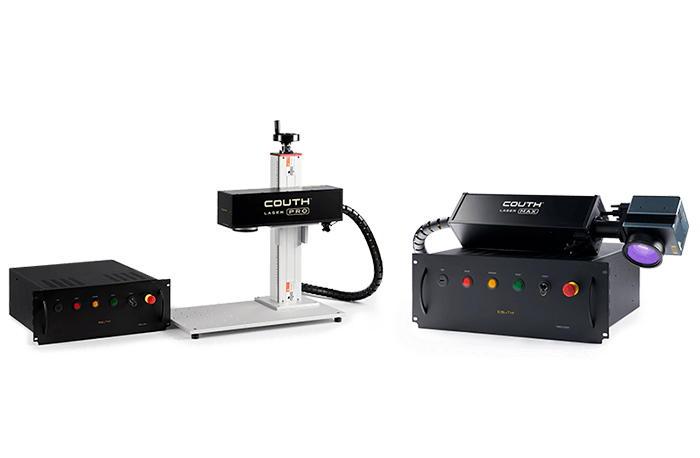
- Direct marking: Methods such as micro-percussion, laser or scratching allow direct marking of products, ensuring that traceability information is always available, even in adverse conditions.
3. Implement data capture and recording systems
To manage traceability, it is essential to have systems in place to capture and record data. This includes:
- Code readers: Devices that allow barcodes or QR codes to be scanned to record information in real time.
- Traceability software: Tools that integrate traceability information and allow detailed tracking of products throughout the supply chain. These systems can be integrated into an ERP (Enterprise Resource Planning) for more efficient management.
Incident management and quality control
How to record and act on detected incidents. A critical aspect of traceability is incident management. It is essential to establish a clear protocol for recording and acting on any incidents detected.
- Incident logging: Document any issues that arise, such as product defects or quality problems. This allows for subsequent analysis and implementation of corrective actions.
- Corrective actions: Once an issue has been recorded, it is vital to act quickly to mitigate the impact. This may include recalling defective products, revising production processes or improving quality controls.
Examples of Traceability Systems in Industry
Below are some examples of traceability systems in various industries:
Automotive sector: parts marked and traced by serial number.
In the automotive industry, parts are marked and traced by unique serial numbers. Each vehicle component, from the engine to the electrical systems, carries a serial number that allows manufacturers and suppliers to trace its origin and production history.
This is crucial to ensure quality and safety, as well as to facilitate maintenance and repairs. In the event of a defect, the serial number enables the batch concerned to be quickly identified and the necessary action to be taken.
Metalworking: DataMatrix codes engraved by micro-percussion and laser engraving
DataMatrix codes engraved by micro-percussion and laser are used to ensure product traceability. These codes are extremely compact and can store a large amount of information, allowing manufacturers to trace each piece of metal from production to end use.
Micro-percussion and laser marking ensures that the code is durable and resistant to harsh conditions, which is essential in industrial environments.
Food: batch control via QR codesç
In the food industry, batch control is done using QR codes. These codes allow consumers to scan the product and access detailed information about its origin, ingredients and production processes.
This not only improves transparency, but also helps companies manage product recalls more efficiently. If a food safety issue is detected, QR codes make it easier to quickly identify affected batches and recall them from the market.
Looking for the best industrial traceability and marking solution? COUTH is your partner
If you are looking for the best traceability systems for your company, COUTH can offer you the highest quality and efficiency in industrial marking.
We have the most advanced technology for product traceability, with laser, micro-percussion and scratch marking, to meet the needs of today’s industry. Do not hesitate to contact us.