



COUTH LASER CO₂

The advanced technology of COUTH‘s CO₂ laser markers enables a delicate yet extremely fast interaction with non-metallic materials, achieving perfect contrast without compromising the integrity of the product.
Designed for operational efficiency, our CO₂ laser systems guarantee an indelible mark that complies with the most demanding international labeling and safety regulations.

Your trusted laser marking system
Download product information in PDF


 Characteristics COUTH LASER CO₂
 Characteristics
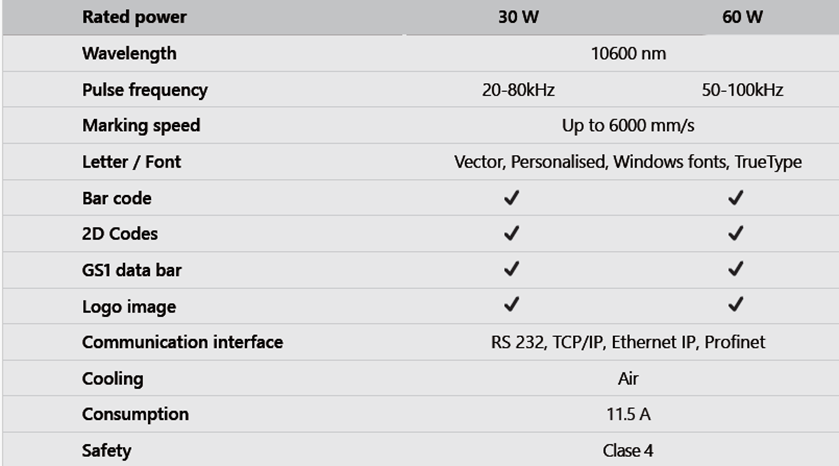
 Table of characteristics
3D Marking

- Speed up to 5000 mm/s.
- Marking area 200×200 mm.
- Versatility in materials.
- Supported file formats: .STL (recomended), .SMF and .X3D.
- Adjustable power to work with higher power levels than conventional 3D systems, increasing the range of applications and marking efficacy.
- Dynamic focus technology that automatically adjusts the focal position for marking, achieving precise and uniform results on complex surfaces.
- Advanced optical design to reduce light loss, ensuring high precision and marking speed.
Standalone
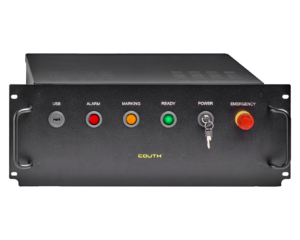
- Laser system that can be integrated into any production line.
- The software can be set to operate totally autonomously.
- File transfer from PC to the laser system via USB.
- Marking in STAND ALONE mode (no PC required).
- Serial option included in all COUTH LASER power settings.
Deep Marking

- Process by means of which the laser beam eliminates material to create a non-superficial mark.
- Provides for light marking (up to 25 microns) and superior marks for moulds, seals, etc.
MOF - Mark on the fly
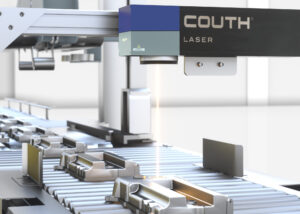
- Dynamic marking system that can be used while parts are in movement
- The perfect solution to be integrated onto production lines, maximising the system’s power and speed.
- An ideal option for stations with a conveyor belt line since the movement of the object to be marked is superimposed with the laser beam’s movement.
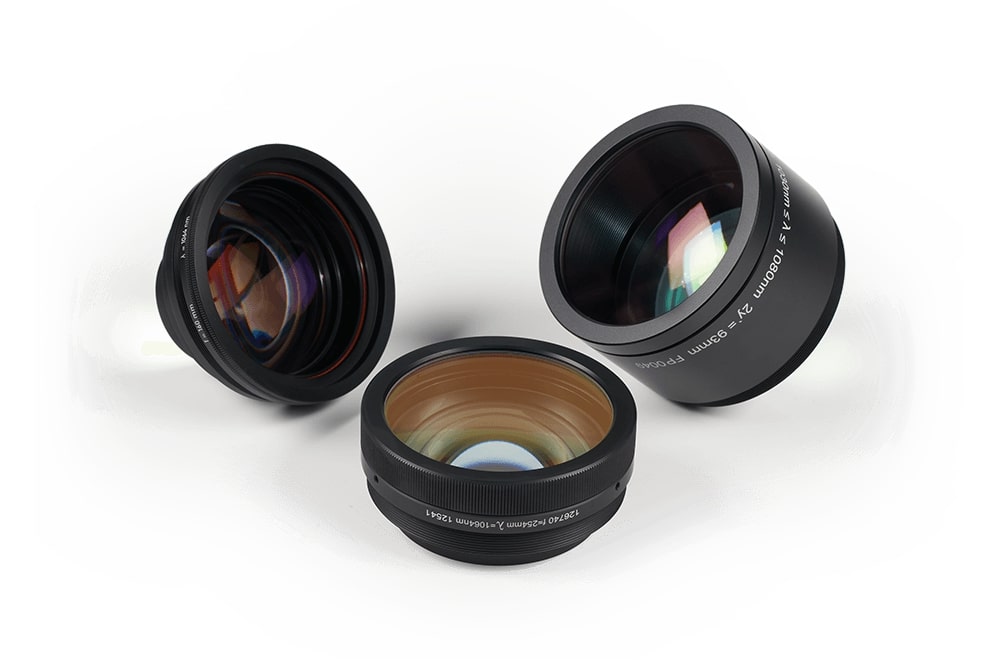
Lenses

Connection options
- PROFINET
- ETHERNET/IP
AUTOFOCUS

- Accessory to automate the optimal focusing for marking.
- Motorized column that automatically lowers or rises to mark in the ideal position.
Frequently Asked Questions
How does a CO₂ laser differ from other types of lasers?
Although the CO₂ laser is a well-established standard, its operation and applications differ drastically from fiber or diode options.
Below, we break down the key differences so you can determine which best aligns with your production needs:
1. Origin and Affinity with the Material
The most critical difference is the wavelength. The CO₂ laser operates using a mixture of gases and has a long wavelength, making it unbeatable for working with organic materials such as wood, leather, acrylic, and glass.
In contrast, fiber and diode lasers use solid-state components (optical fiber and semiconductors) to create much shorter wavelengths.
2. Processing speed and precision
Due to their physical nature, short-wavelength lasers (fiber and diode) are typically faster for marking and engraving, as the material reacts almost instantly upon contact. In the case of CO₂, the absorption process is slightly slower, which can increase cycle times on high-volume production lines, although it offers a superior finish on cuts of non-metallic materials.
3. Maintenance and operational lifespan
The CO₂ marking system requires mirror alignment, lens cleaning, and replacement of the gas tube after approximately 12,000 hours of use.
In contrast, fiber and diode systems are considered virtually maintenance-free.
4. Cost-Benefit Analysis
If your priority is permanent traceability on metals, speed, and minimal maintenance, the fiber laser is the industrial tool par excellence. The diode laser is relegated to lower-power applications or very specific materials where the investment must be minimal. The CO₂ laser has a lower initial cost but requires consumables and maintenance.
What are the advantages of a CO₂ laser?
- Versatility and high resolution: In the dynamic world of coding, CO₂ laser markers stand out for their ability to work on a variety of substrates (leather, wood, textiles, coated metals, acrylics, glass, etc.). This equipment emits a wavelength of 10.6 microns, a feature that allows for aesthetically flawless and fast marking.
- Optimization of cycle times: Integrating a CO₂ laser into a production line provides an immediate competitive advantage. Thanks to its galvanic nature, the light beam travels at astonishing speeds, allowing for the marking of thousands of characters per minute.
- Long-lasting quality: The CO₂ laser marker does not add material to the surface; it transforms the material itself, making the mark resistant to moisture, sunlight, and mechanical abrasion.
- Intelligent Software: Our proprietary software is intuitive and robust, allowing for easy editing of vector files and management of external databases.
How does this laser’s speed compare to others?
In applications on compatible substrates, the CO₂ laser is often faster than mechanical systems and competes directly with inkjet printing, surpassing it in quality and permanence, but its processing is slower when compared to diode and fiber lasers.
Its galvanometer mirror system enables scanning speeds capable of processing small parts in mere milliseconds, maintaining absolute precision in every stroke.
What maintenance does a CO2 laser marking machine require:
The CO₂ laser requires periodic inspection of the gas mixture (if it is not a sealed unit) and cleaning of the mirrors and lenses. Since the process typically generates fumes or particles (especially when working with wood or plastics), it is vital to have an efficient extraction system to prevent residues from settling on the optics and affecting the beam power.
What is its comparative cost?
In terms of initial investment, the CO₂ laser is typically more economical than a fiber laser of equivalent power, but it requires consumables and regular maintenance, which increases its operating cost.
