



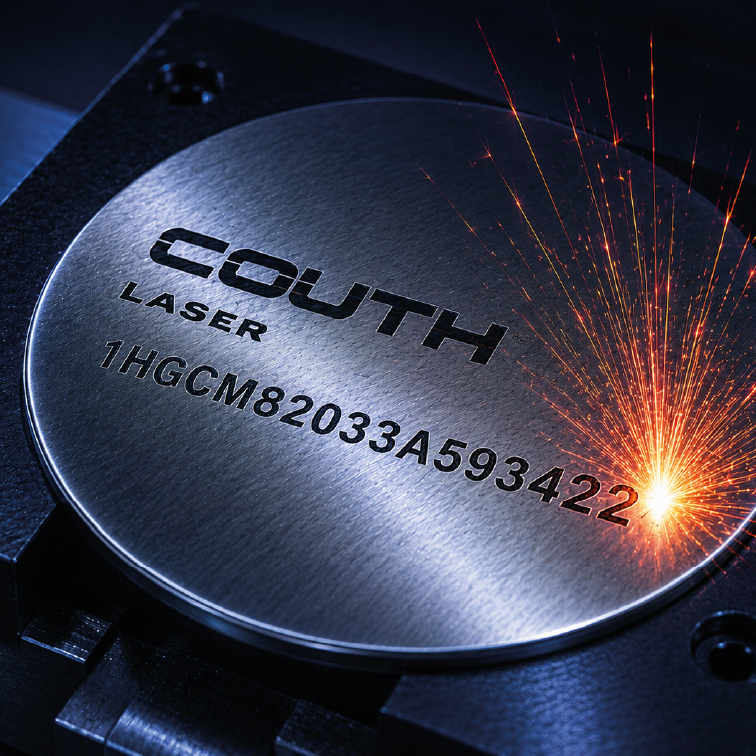
Not all materials react the same way to laser marking
Choosing an industrial laser marker isn’t just about selecting a power level or working speed. One of the most important factors is understanding how each material reacts to the laser.
The same system that provides a clean, high-contrast mark on stainless steel may not produce the expected result on plastic, anodized aluminum, or cardboard. The interaction between the laser beam and the material directly affects aspects such as:
- Marking contrast
- Legibility
- Depth
- Processing speed
- Thermal impact
- Mark durability
For this reason, in industrial traceability applications, there is no single technology that works for all cases.
The choice between fiber, MOPA, or CO2 lasers depends on both the material and the production and quality requirements of the process.
What type of laser is recommended for metal?
In metal applications, the most used technology is typically COUTH Fiber Laser.
This type of laser operates at a wavelength particularly suited for metallic materials, enabling precise, fast, and permanent marking.
It is commonly used in applications on:
- Stainless steel
- Carbon steel
- Aluminum
- Brass
- Titanium
- Coated metal surfaces
COUTH Fiber Laser is frequently used for:
- DataMatrix codes
- Industrial QR codes
- Serialization
- Permanent traceability
- Technical marking
- Identification plates
Additionally, it offers high processing speed and low maintenance, making it a widely adopted solution in automated industrial environments.
Which laser should be used for aluminum?
Aluminum presents specific challenges in industrial laser marking.
Depending on the surface finish, the type of aluminum, and the required contrast, it may be advisable to use different configurations.
In many cases, COUTH Fiber Laser delivers excellent results on:
- Natural aluminum
- Anodized aluminum
- Machined parts
- Industrial components
However, when the application requires greater thermal control, finer finishes, or high-contrast markings, COUTH MOPA Laser technology offers significant advantages.
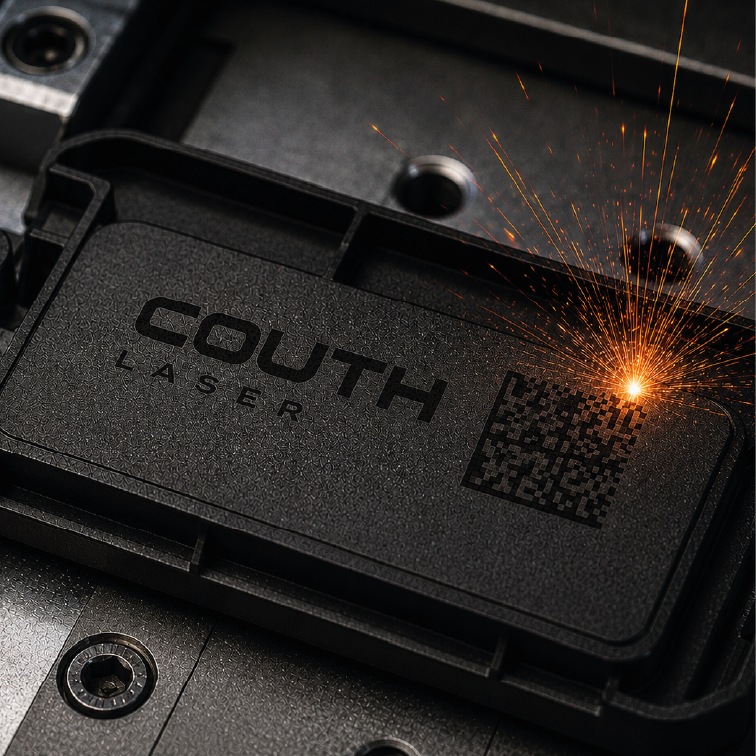
What are the advantages of COUTH Laser MOPA?
COUTH Laser MOPA introduces more advanced control over the laser pulse.
This allows for the adjustment of parameters related to:
- Frequency
- Pulse duration
- Energy applied to the material
In practice, this translates to greater flexibility when working on sensitive materials or in applications where the visual finish is particularly important.
COUTH Laser MOPA is particularly useful for:
- High-contrast marking
- Marking on engineering plastics
- Applications with low thermal impact
- Aesthetic finishes on metal
On certain materials, this control capability significantly improves readability and reduces deformation or surface burning.
That is why, in complex applications, the debate is not usually just “fiber laser vs. CO2,” but also when it makes sense to incorporate MOPA technology.
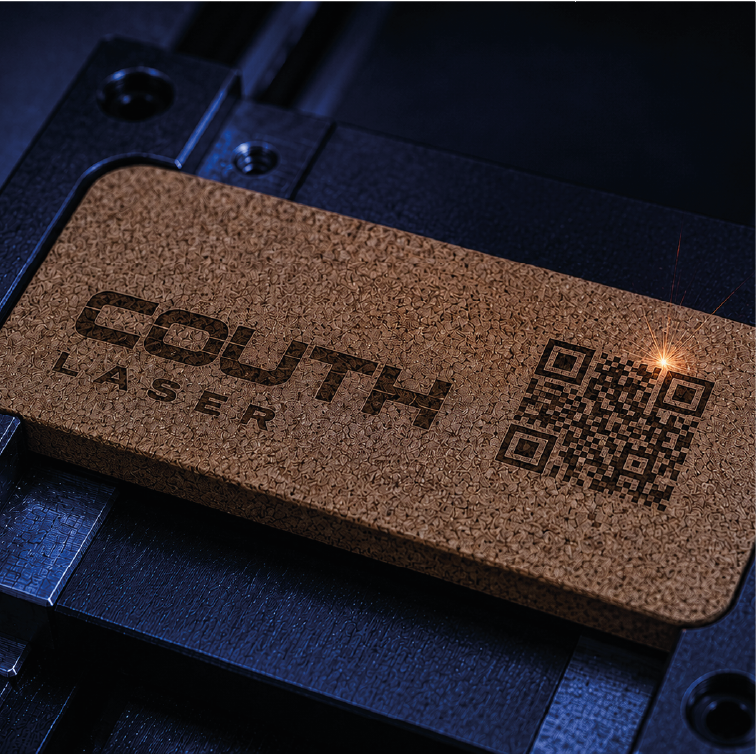
Which materials require CO2 lasers?
CO2 laser technology is particularly suited for organic materials.
Its wavelength offers a more suitable interaction with organic surfaces and certain packaging materials.
It is commonly used on:
- Cardboard
- Paper
- Wood
- Glass
- PET
- Labels
- Some plastics
In sectors such as food, beverages, packaging, and cosmetics, CO2 laser marking technology is a widely used solution for dynamic in-line marking (Mark on The Fly).
This type of technology allows for:
- Expiration dates
- Batch numbers
- QR codes
- Variable traceability
- Marking on moving packaging
Additionally, since it is a contactless marking process that requires no consumables, it helps reduce maintenance and cleaning tasks on high-productivity lines.
How does the material affect the marking result?
The material directly influences how it absorbs the laser energy.
This affects factors such as:
- The final color of the mark
- The contrast achieved
- The maximum operating speed
- The durability of the code
- Readability for machine vision
For example:
| Material | Common technology |
|---|---|
| Stainless steel | Fiber / MOPA |
| Cardboard | CO2 |
| Glass | CO2 |
| Anodized aluminum | Fiber |
| Flexible packaging | Fiber / CO2 |
However, these references should not be interpreted as absolute rules.
Two seemingly similar materials can react completely differently depending on:
- Additives
- Pigmentation
- Coatings
- Production speed
- Reading requirements
- Code type
- Finish type
That is why, in industrial laser marking, validating the actual application remains a fundamental part of the process.
Why is there no single solution that works for everything?
One of the most common mistakes is trying to address all applications with a single laser technology.
Industrial marking depends on multiple variables:
- Material
- Part geometry
- Required contrast
- Production speed
- Code type
- In-line integration
- Regulatory and traceability requirements
For example, a high-speed beverage line has completely different needs than a deep marking application on steel or an aesthetic marking application on engineering plastics.
That is why, at COUTH, we work with different industrial marking technologies, adapting the solution according to the actual behavior of the material and production conditions.
The goal is not merely to mark, but to ensure:
- Legibility
- Repeatability
- Process stability
- Industrial integration
- Reliable traceability
How do you know which laser marker your application really needs?
The right choice depends not only on the technology, but on understanding the application.
Before defining an industrial laser marking solution, it is important to analyze:
- Material and surface finish
- Type of code or information to be marked
- Traceability requirements
- Line speed
- Automation needs
- Required contrast level
- Production environment
In many cases, small differences in the material or application can completely change the recommended technology.
That is why validation through real-world testing remains key to ensuring that the marking meets the process’s quality, productivity, and durability requirements.
Choosing the right industrial laser marker involves much more than simply selecting a piece of equipment.
Each material responds differently to the laser and understanding that interaction is essential to achieving legible marking adapted to the production environment.
Technologies such as fiber, MOPA, and CO2 enable a wide range of applications, from traceability on metal to dynamic marking on packaging or high-contrast applications on sensitive materials.
In industrial applications, the key is not to find universal technology, but to define which solution best suits each process.
At COUTH, we analyze each application by considering the material, the type of code, the production speed, and the traceability requirements to determine the most suitable marking solution.
If you’re evaluating what type of industrial marker you need, we can help you select the right one and define the most efficient configuration for your production environment.