


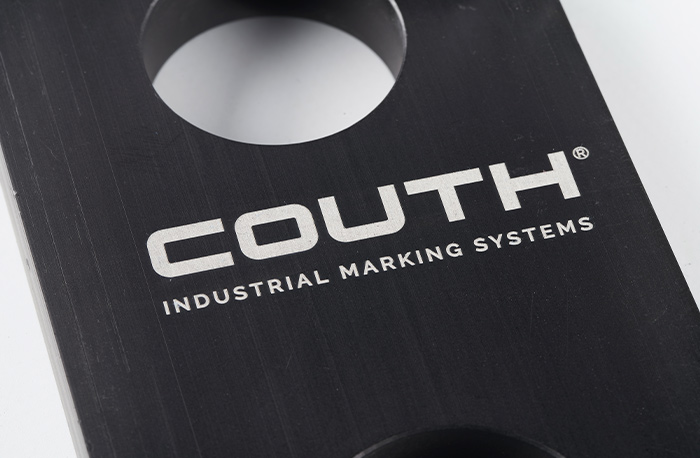
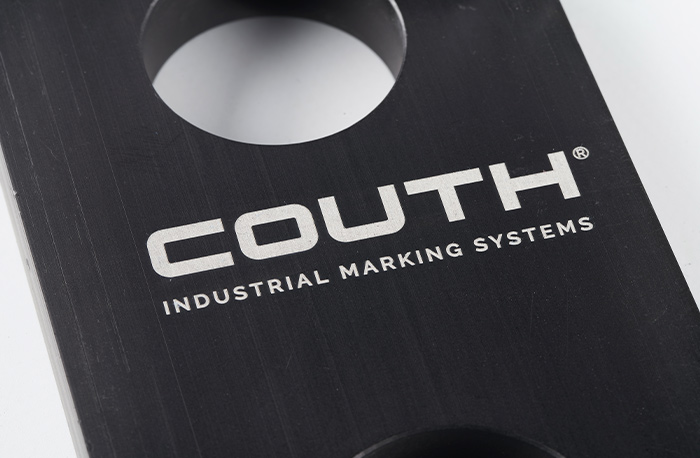
When it comes to industrial marking and engraving, laser technology has become one of the most precise and efficient options for working with materials such as metal. However, one of the most common questions when choosing a laser system is: What power does a laser need to effectively engrave metal?
The answer to this question depends on several factors, such as the type of metal, the depth of the engraving desired, and the speed of the process. Understanding these aspects is crucial for selecting the right equipment that ensures high-quality results while optimizing costs and production time.
At COUTH, we explain everything related to laser power for engraving metal, what affects the process performance, and why choosing the right technology is essential for your industrial needs.
Laser Engraving on Metals
Laser engraving on metals is an advanced technique that uses a laser beam to mark or engrave metal surfaces with high precision. This method is widely used across various industries due to its ability to produce durable, detailed, and wear-resistant marks.
How Does Laser Engraving on Metals Work?
Metal laser engraving is done through a high-intensity laser beam that interacts with the surface of the metal. Depending on the configuration, the laser can:
- Engrave: Remove a layer of material to create a design or text.
- Mark: Change the color or texture of the surface without removing material, as in oxidation marking.
This process is ideal for metals such as stainless steel, steel, aluminum, brass, and titanium.
What Laser Power Is Needed to Engrave Metal?
The laser power required to engrave metal depends on the application and the level of detail needed.
Most laser engraving on metal requires power ranging from 20W to 50W, and for applications needing greater speed or depth, up to 80W or 100W may be used for high-quality results.
COUTH’s equipment offers excellent quality and can be tailored to the client’s marking needs (features and materials), with laser power ranging from 20W to 100W for Fiber Laser machines and 30W to 60W for CO₂ lasers.
Types of Lasers for Engraving Metal
At COUTH, as a company specialized in industrial marking and engraving solutions, we offer advanced technologies for laser engraving on metals.
1. Fiber Laser
Fiber lasers are the most commonly used by COUTH for metal engraving. These lasers are ideal for industrial applications due to their high precision and efficiency. Key features include:
Applications: Engraving QR codes, serial numbers, logos, and marks on metals such as stainless steel, aluminum, brass, and titanium.
Advantages:
- High engraving speed
- Excellent detail quality
- Low maintenance and long lifespan
- Power: Between 20W and 100W
2. CO₂ Laser
Although CO₂ lasers are not commonly used for bare metals, they can be used for coated or anodized metals. These lasers are more versatile for non-metallic materials but can be useful for specific metal marking applications.
Applications: Engraving on specially coated or anodized metals
Advantages:
- Versatility for various materials
- Ideal for surface engraving
- Power: Between 30W and 60W
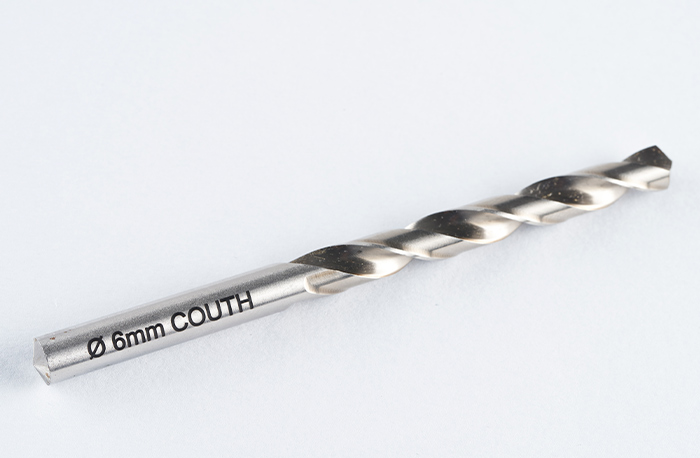
Laser Power by Metal Type
The power required to engrave metal with a laser varies depending on the type of metal, its thickness, and whether you want a surface or deep engraving. Below is a breakdown of recommended power by metal type and application:
1. Stainless Steel
- Recommended Power: 20W to 50W for surface engraving with fiber laser
- Applications: QR codes, logos, serial numbers, industrial markings
- Note: For deeper engravings or cutting, higher power like 60W or more may be required
2. Aluminum
- Recommended Power: Similar to stainless steel, 20W to 50W for surface engraving
- Applications: Engraving on anodized or bare aluminum, ideal for part customization
- Note: Anodized aluminum is easier to engrave due to its coating
3. Brass and Copper
- Recommended Power: 30W to 50W for surface engraving
- Applications: Fine detail engraving on decorative or industrial parts
- Note: These metals are more reflective and may need specific settings or adjustments
4. Titanium
- Recommended Power: 30W to 60W for surface engraving
- Applications: Engraving on medical, aerospace, or high-precision components
- Note: Titanium is excellent for high-quality engraving due to its ability to oxidize into colors under the laser
5. Hard Metals (e.g., Carbon Steel)
- Recommended Power: 50W to 100W for deep or industrial-grade engravings
- Applications: Engraving on tools, machinery parts, structural components
- Note: For cutting or very deep engraving, industrial powers of up to 1500W or more may be needed
6. Coated or Anodized Metals
- Recommended Power: 20W to 30W for surface engraving
- Applications: Engraving on anodized aluminum, painted steel, or metals with special coatings
- Note: Coatings make engraving easier, as the laser interacts mainly with the surface layer
Importance of Choosing the Right Laser Power for Metal Engraving
Choosing the correct laser power for metal engraving is a key factor that directly affects engraving quality, efficiency, and durability. Below are the main reasons why selecting the proper power is essential:
1) Engraving Quality
Laser power determines the engraving depth and accuracy:
- Lower power (20W–50W) is ideal for shallow, detailed engravings such as logos, QR codes, or serial numbers, without damaging the metal structure
- Inadequate power can result in poor engraving quality or even damage the material, especially with softer or coated metals
2) Compatibility with Metal Type
Each metal has unique properties (reflectivity, hardness) that influence power requirements:
- Metals like stainless steel or anodized aluminum are typically engraved efficiently with 20W–50W
- Harder or more reflective metals like carbon steel or copper may need higher power to achieve deep, consistent engraving
3) Process Efficiency
Power also affects the engraving speed:
- Adequate power allows the process to be completed faster, optimizing industrial production
- Too little power may require multiple passes, increasing time and machine wear
4) Material Preservation
Excessive power can overheat the metal, causing deformation or surface damage. Conversely, insufficient power may not engrave properly—especially on hard metals.
5) Operating Costs
Using more power than necessary increases energy consumption and equipment wear. Selecting the right power helps optimize operating costs and extend machine life.
In summary, choosing the correct power for laser metal engraving is essential for ensuring high-quality, efficient, and cost-effective results. Factors such as metal type, desired depth, and process speed must be carefully considered when adjusting laser power.
Generally, 20W–50W is ideal for most surface engravings on metal, while more demanding applications may require higher power.
COUTH – Your Best Partner for Laser Engraving on Metals
There are many reasons why COUTH should be your trusted provider of industrial marking solutions. Here are some of the highlights:
1. Experience and Specialization
At COUTH, we have extensive experience in developing laser marking and engraving technologies, making us a reliable choice for demanding industrial applications. Our solutions are designed for sectors such as aerospace, medical, and automotive, where precision and durability are essential.
2. Advanced Technology
We offer state-of-the-art laser engraving machines, such as the COUTH LASER range, known for delivering high-precision engravings on a wide variety of metals, including stainless steel, titanium, aluminum, and more.
3. Versatility in Applications
Our machines are ideal for various engraving types, from surface to deep engravings. Applications include:
- Engraving QR codes, serial numbers, and logos
- Customizing industrial and decorative parts
- Engraving on corrosion-resistant metals like stainless steel and titanium
4. Customization to Client Needs
We help our customers select the right laser machine based on specific needs, such as metal type, required power, and desired detail level. This ensures each client gets the most efficient solution for their business.
5. Durability and Precision
Engravings made with our machines are highly wear-resistant, making them ideal for industrial applications where durability is key. Moreover, the precision of our equipment guarantees consistent, high-quality results.
6. Innovation in the Industry
At COUTH, we stay at the forefront of laser engraving technology, offering innovative solutions that meet the highest industry standards. This includes advanced techniques to ensure corrosion-free engravings with flawless finishes.
If you’re looking for the best machines for metal laser engraving, contact us for more information.
